
Learning how to press tofu changes how well it absorbs a marinade. This guide shows you the method that makes the biggest difference using what you already have at home.
Tofu holds a lot of water—and when marinating is the goal, that water works against you. It blocks the marinade from getting in and dilutes whatever sauce the tofu is sitting in. Pressing solves both problems. This guide covers how to press tofu using what you already have at home, when it’s worth doing, and when you can skip it.
The towel method outlined here pulls more moisture from the center of the tofu than paper towels or a standard press can—and the difference shows up once it’s had a chance to marinate. A thick bath towel and about 10 pounds of books are all you need.
I’ve been pressing tofu this way for over a decade, and it’s my go-to method. Not every tofu recipe requires pressing, but this covers when it matters, how to do it, and what types can be pressed.
Do You Have to Press Tofu?
No, but it depends on what you’re making. If the recipe calls for marinating, pressing is essential. Tofu holds moisture like a sponge that’s already full. Press that moisture out first, and the tofu is set up to more effectively absorb the marinade.
For everything else? Pressing is usually unnecessary. For example, a tofu scramble doesn’t need it—moisture cooks off in the pan. Soups and braises don’t need it either, since the tofu is absorbing liquid anyway. If you’re working with super-firm or high-protein tofu, skip it entirely: it’s vacuum-sealed and already dry enough to go straight into a recipe. Soft or silken? Skip it. It’s not needed. Firm or extra-firm tofu? This is the kind to use.
TL; DR: Press tofu when marinating, and plan about an hour for it. For everything else, it’s optional.
How to Press Tofu: The Towel Method
This method works better than paper towels or a tofu press for one reason: a thick bath towel pulls moisture from the center of the tofu, not just the surface. That’s where most of the water is, and it’s what a few layers of paper towel can’t reach.
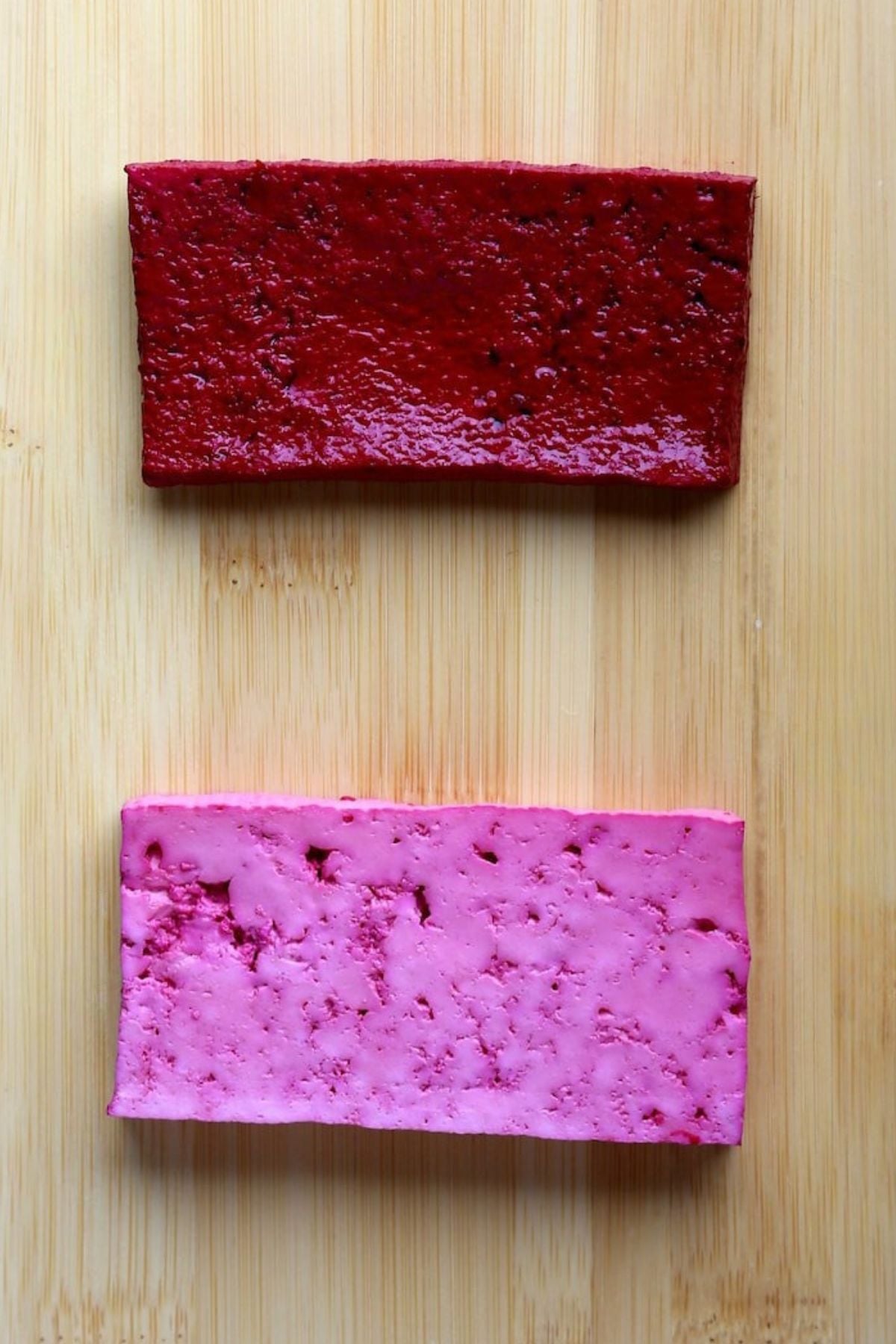
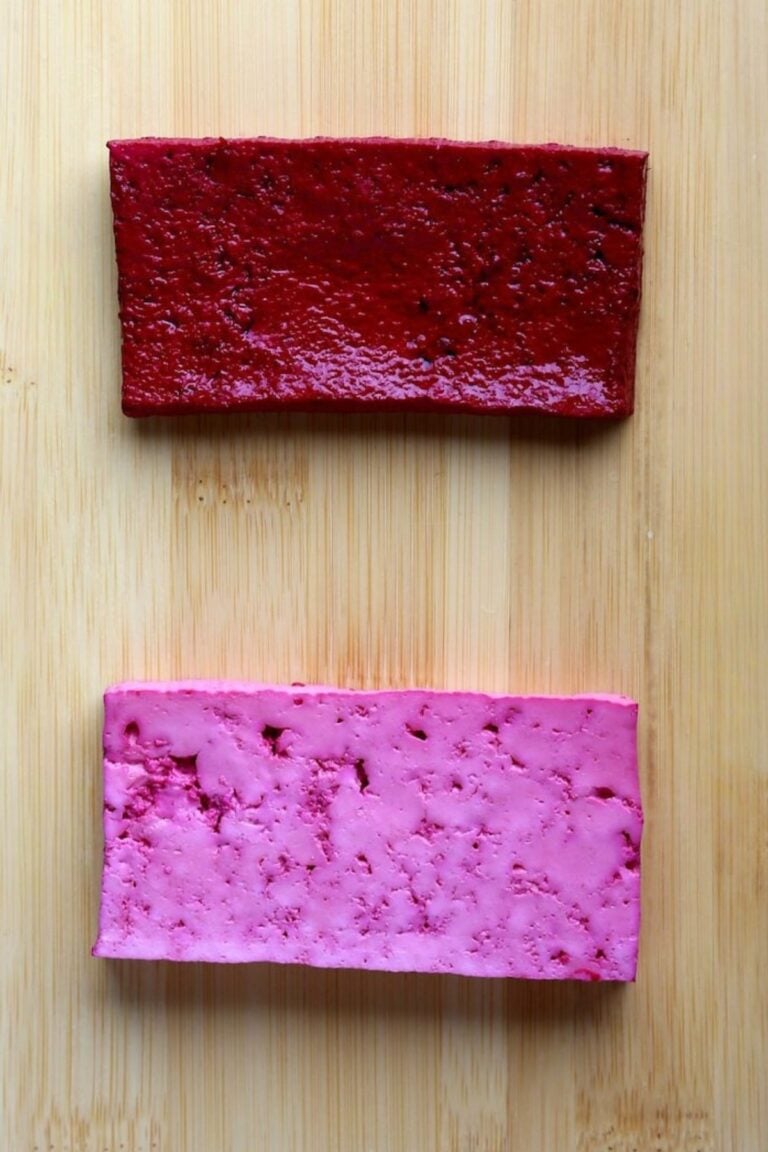
To make that difference visible, I pressed two blocks side by side—one with paper towels, one with a towel—then dropped both into a beet juice marinade, just to illustrate the difference. The towel-pressed block absorbed the color all the way through within an hour. The paper towel block stayed pale in the center. This comparison shows why this method matters. Here’s how to do it:
- Cut the tofu into 4 to 8 slabs. Slicing increases surface area on every piece, which means more contact with the towel and more moisture drawn out. A whole block pressed intact won’t give you the same result.
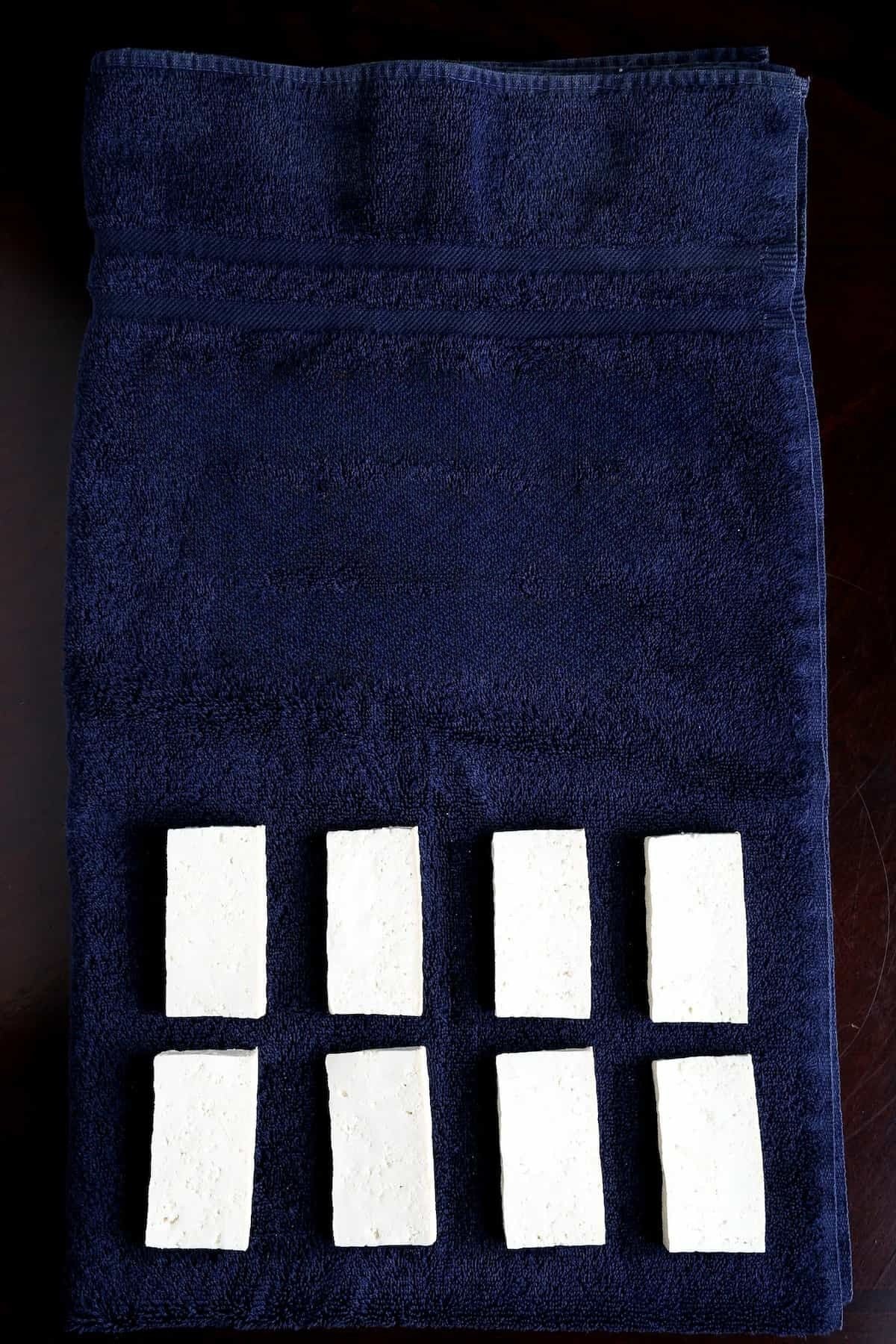
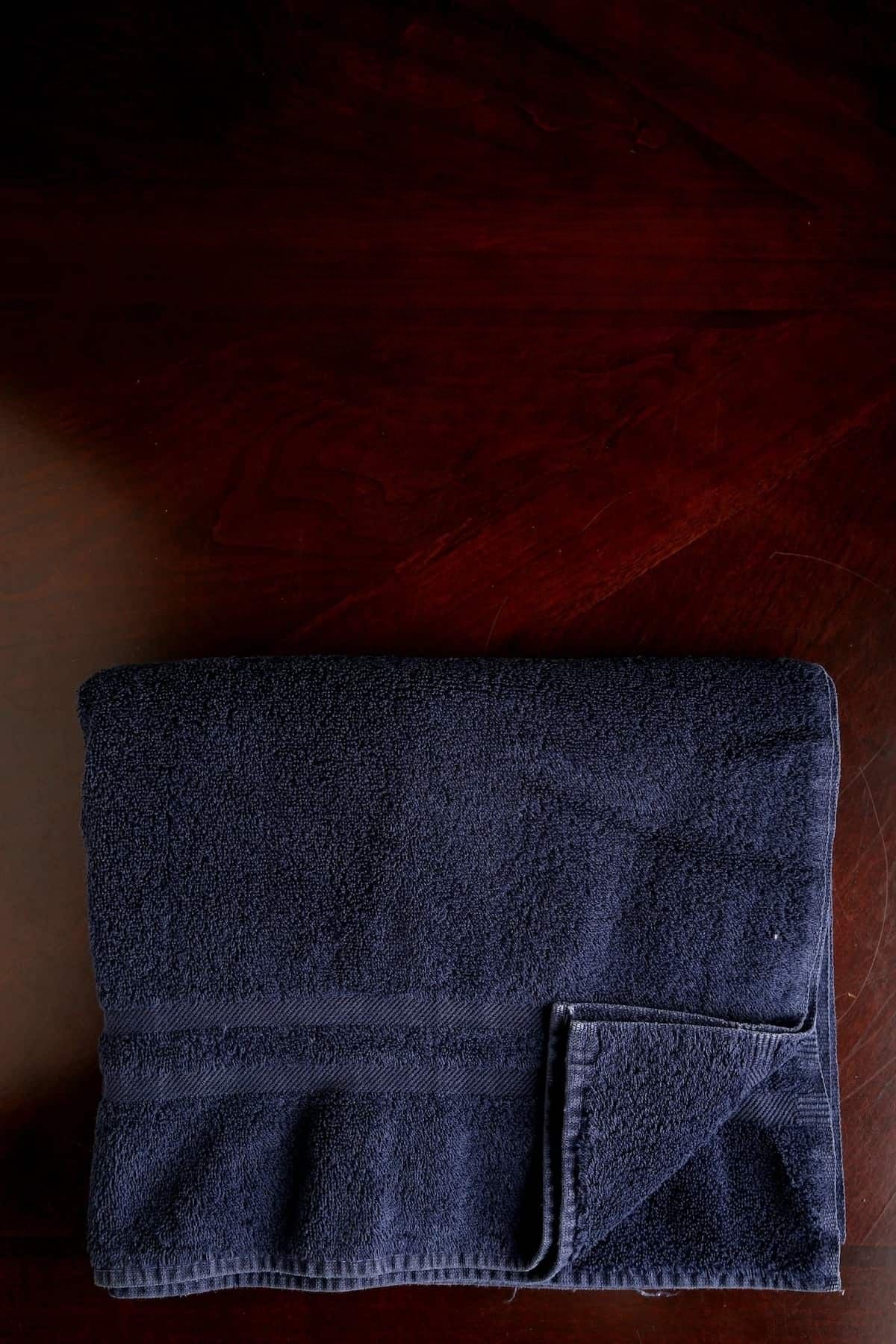
- Fold a thick bath towel in half and lay the slabs across it evenly. The towel needs to be thick and absorbent—a thin kitchen towel won’t cut it. Space the slabs so each one has full contact with the fabric.
- Fold the towel over the top to cover the tofu completely. Both sides need coverage, not just the bottom.
- Stack about 10 pounds of books on top. Large books work well. Add them gradually to avoid smashing the tofu. Ten pounds provides enough pressure without crushing the slabs.
- Press for one hour. At the 30-minute mark, the towel will already be noticeably damp. At one hour, you’ll be surprised how wet it is—that’s the moisture that would have diluted your marinade.
How to Press Tofu Without a Tofu Press: The Paper Towel Method
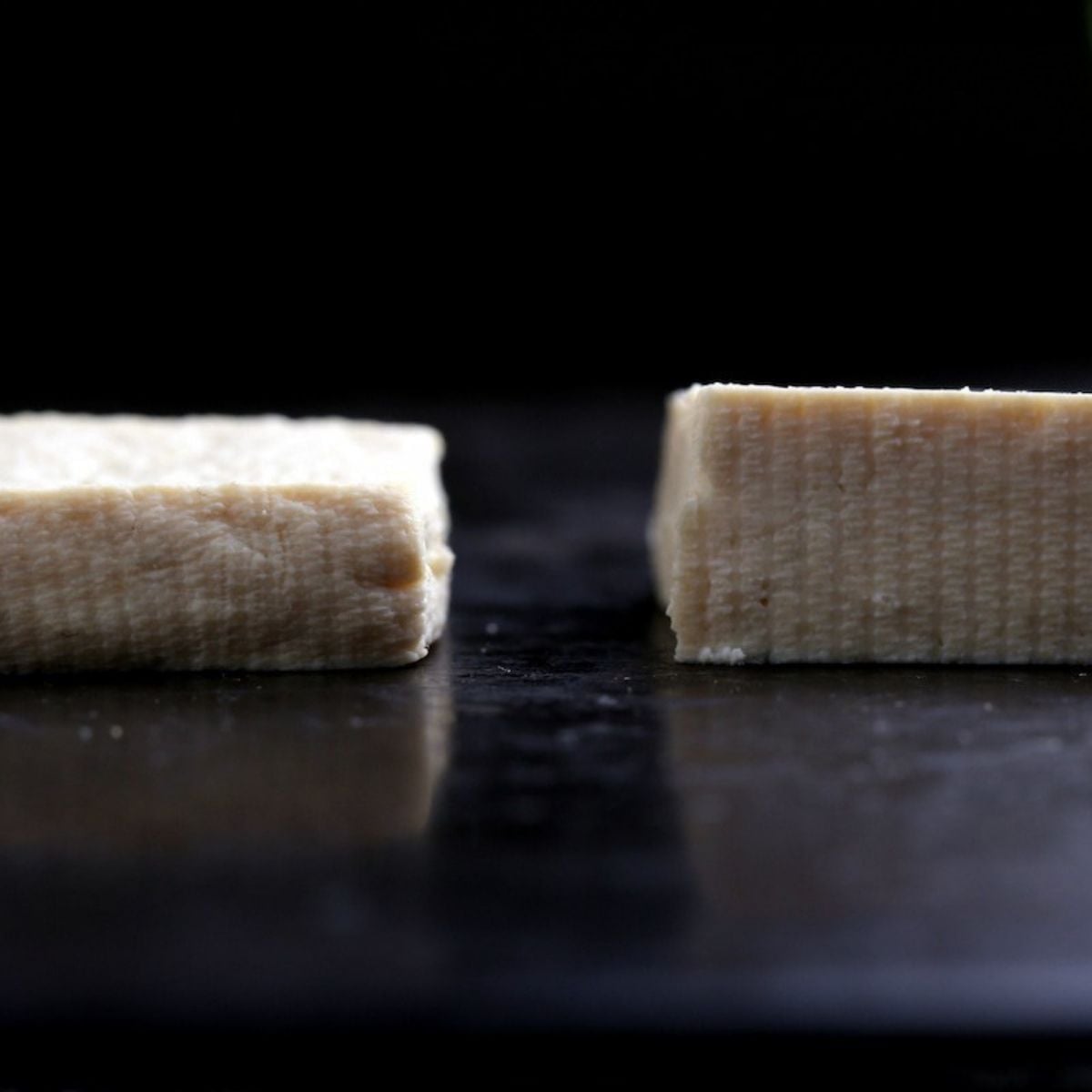
Paper towels work for blotting surface moisture, which is all some recipes need. For scrambles, quick sears, or anything hitting a hot pan where you just want to reduce exterior moisture, they’re a perfectly good option—but they’re not as effective as a towel for pressing.
They can’t pull moisture from the center of a tofu block the way an absorbent towel does, and depending on how much moisture your tofu holds, you will go through several layers before enough moisture is pulled out. For marinating, the beet juice comparison above shows exactly what happens.
The slab pressed with paper towels stayed pale in the center. The towel-pressed slab absorbed the color all the way through. More absorption = more flavor.
With that in mind, here’s how to do it:
- Wrap the tofu block in several layers of paper towels. A single layer won’t absorb enough—use at least three or four on each side.
- Place it on a flat surface and set something heavy on top. A cast iron skillet, a heavy pot, or a container with canned goods placed inside. The weight doesn’t need to be precise—aim for something that applies even, steady pressure.
- Press for 15 to 30 minutes. Check the paper towels at 15 minutes. If they’re saturated, swap them out and continue. For marinating, extend to 30 minutes minimum—though the towel method will still outperform it at any duration.
Using a Tofu Press
A tofu press works by applying slow, adjustable pressure to a whole block over time—typically using a spring-loaded or screw-tightened mechanism. It’s tidier than the towel method and takes up less counter space, which is the main appeal.
The limitation is the same as paper towels: it presses from the outside in. A whole block in a press will lose surface moisture effectively, but the center stays more saturated than tofu that’s been sliced and pressed against an absorbent towel. For recipes that don’t rely on deep marinade absorption, that distinction won’t matter much. For marinating, it will.
If you already own a tofu press and you’re happy with your results, there’s no reason to switch. But if you’ve found that your marinated tofu tastes flat or watery despite pressing, switching to the towel method and slicing the tofu first will likely make a big difference!
How Long to Press Tofu
The right amount of time depends on what you’re making and how much moisture you need to remove. 30 minutes of pressing is the minimum for recipes that call for marinating. It’s enough to open up the tofu and give the marinade somewhere to go, but the result won’t be as effective as a full hour.
- One hour is the standard for the towel method and the timing this guide is built around. At one hour, the towel will be significantly damp, and the tofu will be noticeably more compact. It will be dry and ready to absorb whatever marinade it goes into.
- Overnight in the fridge is an option if you want to press and marinate without watching the clock. Press using the towel method, transfer directly into the marinade, and refrigerate. The tofu continues to absorb as it sits, and the result is deeper flavor than a one-hour marinade alone.
- Extra-firm tofu has less moisture than firm tofu, so it reaches the same endpoint faster. 30 to 45 minutes is usually enough. If you’re working with firm tofu and want maximum absorption, go the full hour.
- One thing to avoid: pressing longer than two hours at room temperature. Beyond that point, you’re not gaining much additional moisture removal, and leaving tofu out for extended periods isn’t ideal from a food safety standpoint. If you want a longer press, move it to the fridge.
FAQs
Yes. Press it, then refrigerate it in an airtight container for up to two days. You can also transfer it directly into a marinade after pressing and let it sit overnight. The tofu will continue absorbing as it rests.
No. Silken and soft tofu don’t have the structural integrity for pressing—they’ll just smash. These types aren’t meant for marinating anyway; they’re best used in blended sauces, soups, and desserts where their moisture content is an asset, not a problem.
You can, but the marinade will mostly coat the surface rather than absorb through. The tofu will also release water into the marinade as it sits, diluting it. The only time skipping the press is reasonable is when absorption isn’t the goal—a stir-fry sauce that coats the outside, or a braise where the tofu is cooking in liquid. If you’re marinating with the intent of building flavor all the way through, press first.
Tofu Recipes That Use This Method
More Tofu Guides
- Does Tofu Expire? How To Tell If Tofu Has Gone Bad
- Tofu Recipes (From Easy Eats To Epic Feasts)
- How to Cook Tofu Perfectly in Just 15 Minutes: A Quick Guide
Get This Recipe In Your Inbox
Share your email, and we’ll deliver it straight to your inbox.
Plus, enjoy new content every week as a bonus!
How to Press Tofu (Without A Tofu Press)
Learn how to press tofu using a thick towel and about 10 pounds of books. This method pulls more moisture from the center of the block than paper towels or a tofu press can. One hour gives you tofu that’s dry and ready to effectively absorb marinades.
- Total Time: 1 hour
- Yield: 1 block
Ingredients
- 14–16 ounce block of firm or extra-firm tofu
- large bath towel
- 10 pounds of large books
Instructions
- Cut the tofu into 4 to 8 slabs.
- Fold a large, thick bath towel in half. Place the slabs evenly onto it, then fold the towel over the top.
- Place about 10 pounds of large books over the top.
- Press for one hour.
Notes
- Storage: Pressed tofu can be refrigerated in an airtight container for up to two days. Transfer it directly into a marinade after pressing if you’re not using it right away.
- Tofu type: This method works for firm and extra-firm tofu only. Silken, soft, and super-firm don’t require pressing.
- Weight: Any heavy, flat-bottomed object works, like a cast iron skillet, a pot, or a stack of large books. Aim for about 10 pounds of even pressure.
- Prep Time: 1 hour
- Category: Meal Prep
- Method: Pressed
- Diet: Dairy-Free, Gluten-Free, Vegan, Vegetarian
This article was published in 2014 and updated in 2026 with added clarity and tips.




I agree with the comment about TofuXpress. No paper towel waste, no extra towel washing, and the container is perfect for marinating.
Just wanted to stop by and say that I've been using this method at home and am making the best baked tofu ever! Thank you so much!! it really makes an incredible night-and-day difference with texture and flavor. I used to pay $$ for store-bought baked tofu because I was never happy with the baked tofu I produced at home, this has seriously saved me so much money. Love your blog!!
Thanks for your comment, so happy you like!
I find that when I press it becomes very crumbly. Any ideas why?
Tamara, How are you pressing it? What kind of tofu are you using? Firm? Extra Firm? Does it crumble when you pick it up?
If you try this method with firm tofu, you will get dense almost rubbery tofu that's perfect for marinades that sautees and browns beautifully in the pan. It should not be crumbly at all.
This post is SO awesome!! I always to with method A but I'm totally converting to method B as soon as I get home and get my hands on some tofu! I already love it the first way so I'm super excited to take my tofu love to the next level!
I hope you enjoy, Jojo!
that owl.. <3 i need that one right now:)
brilliant idea to press the tofu! now to find the kitchen towels that don't have my pom's hair on them:)
How cool is THAT? Thanks for the tip. Love the little owl timer 🙂
I bought a few of these. The only thing I use them for is pressing tofu.
http://www.ikea.com/us/en/catalog/products/10100909/
Why not the Tofu Xpress? It's the BEST and works in a very short time.
Like a few other commenters, I never press my tofu! My husband and I just don't have the time to press it, but this was very convincing. You really got me with your scientific approach; I'm going to have to try it!
i love the comparisons!
But WHERE do you get the amazingly adorable owl timer?!?!?!?!?!?!
Fascinating experiment–thanks! The evidence for the enhanced marinade absorption has convinced me to use this pressing technique from now on. Can't wait to try it. On the cat hair/towel fluff issue: I have 2 cats and their hair is not on my clean towels, usually (unless they jump into the clean clothes pile, which sometimes happens). But you could just line the towel with clean cheesecloth or other thin cotton material so the tofu doesn't directly touch the towel fluff, etc. You would still get the towel moisture absorption.
I always press my tofu with paper towels. The towel technique sounds good on paper and it always struck me as much better for the environment but I have no idea how people can use towels in the kitchen because of the lint factor! We have 2 cats and a collie. Even fresh from the dryer, our towels and clothes are always covered in pet hair. There is no way I could use any of our towels anywhere near our food. Even if we didn't, towels shed lint. How does this not get on your food? I'm perplexed. 🙂
hmmmm … we have a cat that sheds like crazy, but I've never had a problem with lint/cat hair sticking to our clean towels or the tofu that's been pressed with it, so I'm not sure what to tell you!
Sounds like you need to clean out the dryer vent! You might check inside the body of your dryer as well.
I bought a used dryer at a thrift shop and cleaned out enough compacted lint to FILL a large trash bag. I'm sure the people discarded their dryer because they thought it didn't work very well anymore. 😉 It works GREAT, now that it's cleaned out. LOL
I have to agree I never press my tofu. I usually buy an extra-firm that is very dry. But the next time I make a dish where the marinade is important I'm giving this a try! Thanks for the demo and awesome pics!
Shamefully, we don't press our tofu often (…or ever). But, this will definitely inspire us to try it a little bit more often. This definitely shows how much can be infused into the tofu.
wow!!!!!!! I NEVER press my tofu, because I am lazy and quick in the kitchen. But geeez, that picture with the difference in how much the marinade is absorbed is VERY COMPELLING. Hm. Now you've got me thinking.
I use the towel method too, unless I'm pressed (ha ha) for time, in which case I give it a quick smooshing between paper towels. I love the beetroot comparative photos though – they really illustrate the difference between these methods – the colour/marinade Tofu B has picked up is quite amazing!