Stock and broth start the same way but serve different purposes. One builds flavor while the other finishes it. Let’s look at where they split and why it matters.

You’ve probably used stock and broth like they’re the same thing—and to be fair, in most weeknight cooking, they sort of are. Both start with vegetables and water. Both leave your kitchen smelling comforting and cozy. But when you step back and look at the process, the difference is clear: one’s a blank canvas, the other’s already painted.
In traditional kitchens, stock is the foundation—unsalted, layered, and built to develop flavor. Broth is the finished piece: seasoned, rounded, and ready to sip. While classic versions rely on animal ingredients, the same logic applies in vegan cooking. The same pot of vegetables can go two ways—leave it plain for a base that builds flavor, or season it for a balanced, ready-to-serve broth.
Stock vs. Broth: What’s The Difference?
If you’ve used “stock” and “broth” interchangeably—same. They share the same ingredients, but the intention behind them is what separates the two. Here’s what really sets them apart:
- Stock is a clean, unsalted base liquid made by simmering vegetables, herbs, and aromatics to extract flavor, color, and natural body. It’s ideal for sauces, chowder, risotto, or any dish you’ll season later.
- Broth is a seasoned, ready-to-serve liquid meant for sipping or quick soups—it’s lighter, balanced, and fully seasoned right from the pot.
Stock is all about extraction. You’re pulling flavor, color, and body from vegetables—especially alliums (onions, leeks, and garlic), mushrooms, and herbs—without introducing salt or acid that could cap how far the flavor goes. Think of it as your liquid foundation. It should taste deep but unfinished, ready to absorb whatever direction you give it next.
Broth, on the other hand, is meant to stand on its own. It’s seasoned, balanced, and rounded off with salt, soy sauce, or miso. You could ladle it into a mug and drink it as-is. Broth is where flavor peaks—stock is where it starts. Here’s a quick rundown of how they differ in purpose, flavor, and use:
| Feature | Stock | Broth |
|---|---|---|
| Base Ingredients | Hearty vegetables like onions, leeks, mushrooms, carrots, and herbs | Similar base, but seasoned with salt, soy sauce, or miso for umami |
| Texture | Fuller-bodied and lightly viscous | Lighter, clearer, and more direct |
| Purpose | Foundation for sauces, soups, and risotto | Seasoned and ready to sip or serve |
| Flavor | Unsalted, layered, and neutral—built for flexibility | Salted, seasoned, and complete—ready to serve |
| Simmer Time | 45–60 minutes | 20–30 minutes |
How to Make Vegan Stock
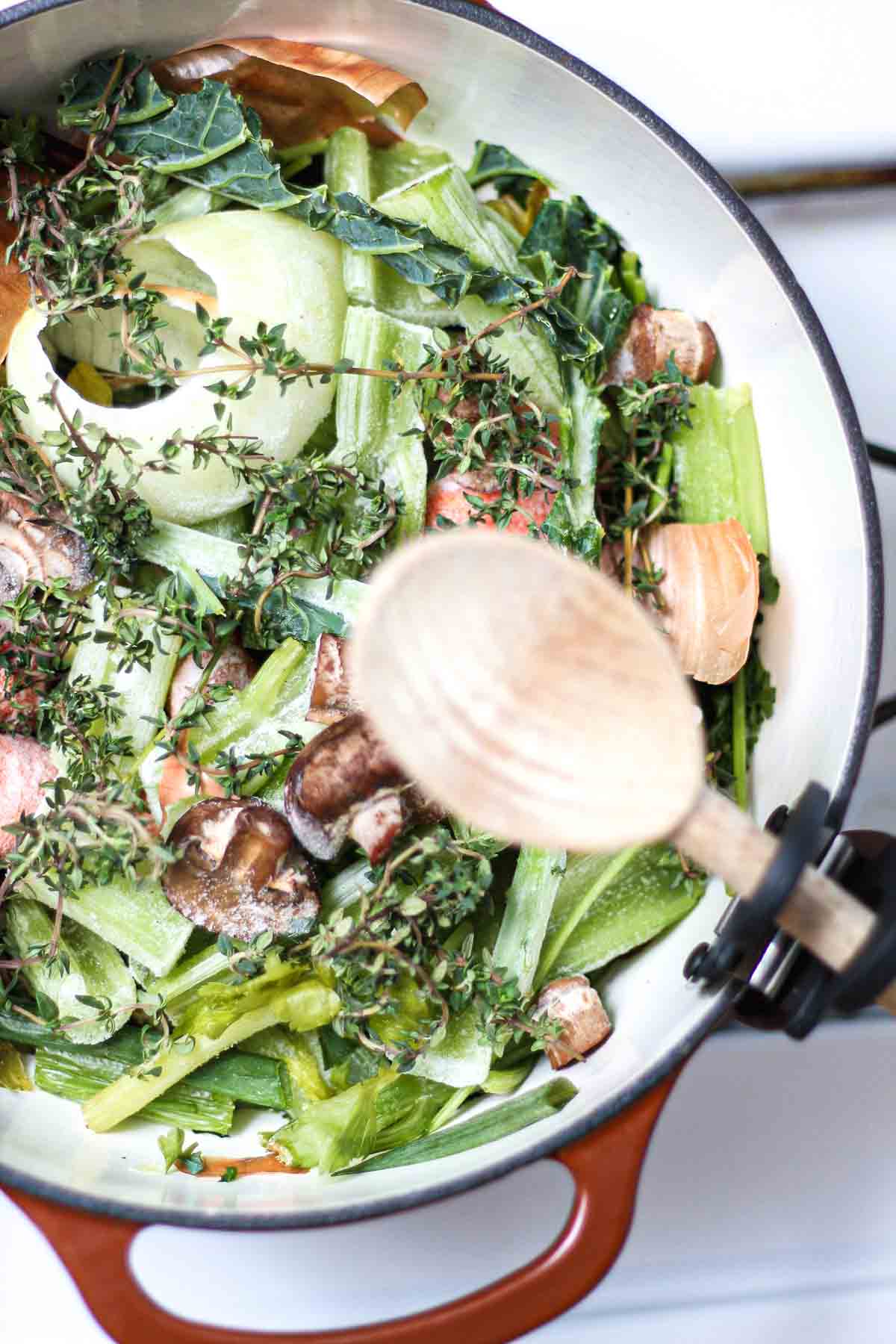
You’re building a base here—clean, unsalted, and deeply savory. The best vegan stock also happens to be zero waste. Instead of tossing onion ends and skins, mushroom stems, or fresh herbs you can’t use up, save them. Keep a bag or container in your freezer for scraps, and when it’s full, you’ve got everything you need to make a pot of stock.
When you’re ready to cook, combine those frozen scraps with a small handful of fresh vegetables or aromatics for balance—whatever you have on hand adds lift and brightness. (See the list of recommended vegetables below.) Cover with cold water, bring it to a gentle simmer, and allow the color and flavor to be extracted from the vegetables until they look pale and the liquid turns gold.
For a deeper, toastier flavor, you can roast or sauté the vegetables first—but for a clean, neutral vegan stock, start cold and go slow. Strain, cool fast, and you’ve got a versatile base you can use anywhere you’d reach for store-bought broth.
Vegetables That Work Best For Stock
The best vegan stock starts with balance—frozen scraps for depth and zero waste, fresh aromatics for brightness. Bonus: frozen scraps extract flavor fast because freezing ruptures their cell walls, helping flavor compounds move directly into the water. Fresh aromatics add brightness back in.
Avoid strong brassicas (broccoli, cabbage, kale, cauliflower, turnip, radish) or overly long simmers—they can push sulfur notes and muddy the flavor. Skip beets unless you want pink stock. Hold the salt until the end; as seasoning turns stock into broth.
Keep a freezer bag of onion or leek ends, carrot peels, celery leaves, mushroom stems, and herb stems. When you’re ready to cook, toss them in the pot along with a small fresh handful (about ½–1 cup) of onion or leek and a few sprigs of thyme or parsley. The frozen vegetables build body; the fresh ones keep the flavor lively. Here’s what’s best when making vegetable stock:
- Onion, leek, or shallot ends: build savory sweetness
- Carrots or parsnips: add body and mild sugars
- Celery ribs and leaves: fresh, clean backbone
- Mushroom stems or caps: deepen umami
- Parsley, thyme, or whole bay leaves: herbal lift that withstands simmering
- Garlic cloves (smashed, unpeeled): mellow sharpness and aromatic depth
- Tomato paste or scraps: subtle acidity and color; adds roundness if you want a darker stock
How To Turn Stock Into Broth
Stock is your foundation—broth is how you bring it to life. Once your vegan stock is strained, you’ve got two choices: freeze it as-is, or turn it into broth right now.
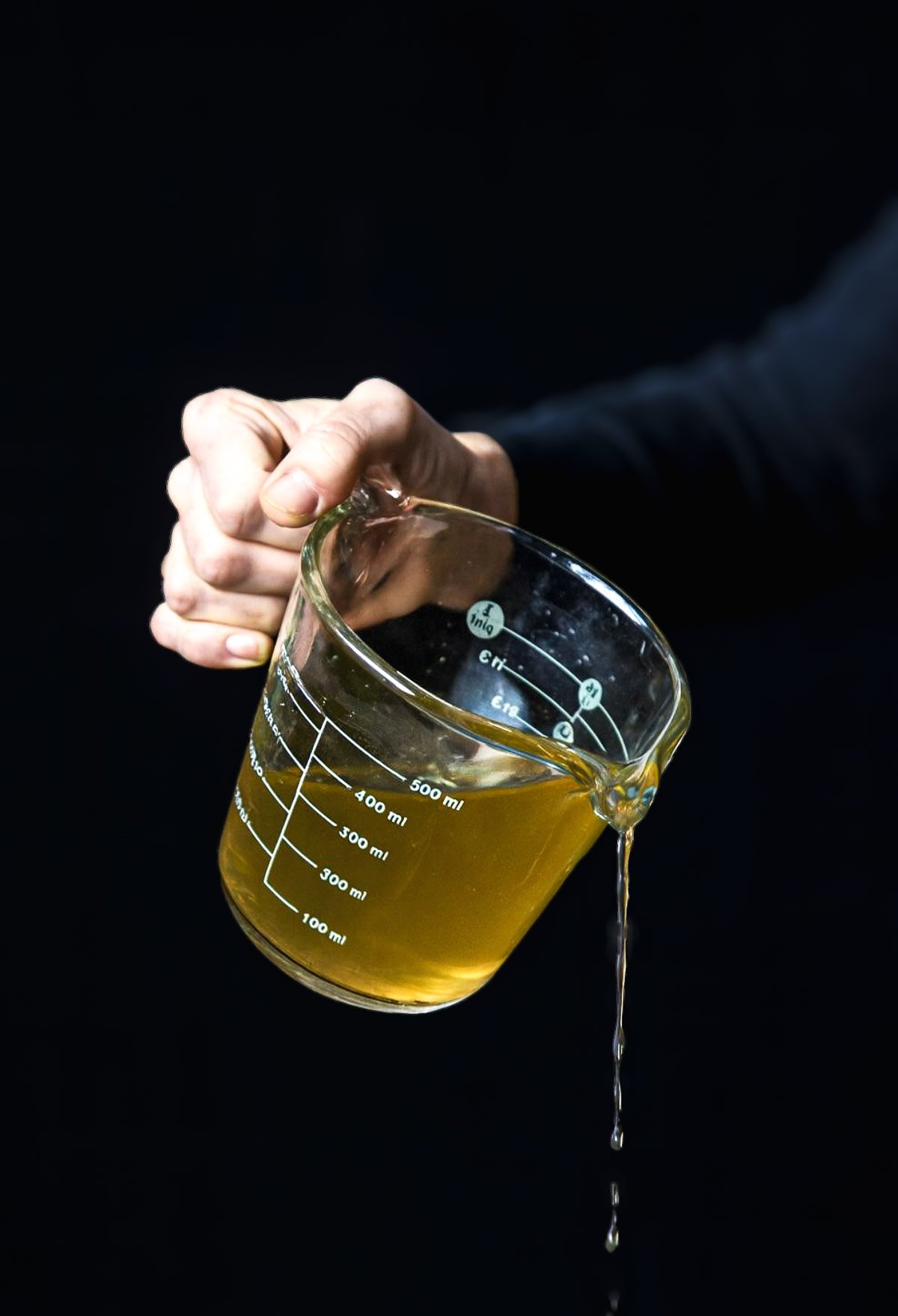
To do that, pour your stock (about one quart) back into the pot and warm it gently. (Unless you used tomato paste or beets, it should be clear and golden.) Add a pinch of salt or a splash of tamari for balance. If you want extra roundness, whisk in a little miso once it’s off the heat, which keeps its flavor and natural probiotics intact. Taste, adjust, repeat. You’ll feel it shift from ordinary to complex.
That’s it—you’ve made broth. Sip it straight, ladle it into vegan ramen, or use it anywhere you’d reach for boxed vegetable broth. This is the version that meets you halfway through dinner prep and makes everything taste homemade.
When to Use Stock vs. Broth
Use stock when you’re building flavor from the ground up—risotto, gravy, ramen broth bases, or anything that reduces. Its job is to deepen what’s already there without competing. Stock gives sauces a backbone, not a spotlight. Now that you know how they differ, here’s when to reach for each:
Use broth when the liquid is the meal—vegan soups, stews, or quick noodle bowls. It’s seasoned and assertive enough to stand alone. Broth brings balance and warmth, while stock brings structure.
When in doubt, remember: stock builds, broth finishes.
- If you’re simmering something slow, reach for stock.
- If you’re seasoning to serve, reach for broth.
Best Vegan Stock, Broth, and Bouillon Brands
Homemade stock gives you full control over what goes in it, but store-bought versions still have their place. The best vegan stock and broth brands build depth with roasted vegetables, tomato, mushrooms, or yeast extract for natural umami. When the balance is right, you get a clean, rounded flavor without the salt bomb. Bouillon is simply concentrated stock—sold as a paste, powder, or cube that you dilute in hot water.
Here are some vegan options:
- Better Than Bouillon No-Chicken Base: A concentrated vegan paste made with roasted vegetables and yeast extract for deep flavor. A spoonful dissolved in hot water adds instant body to soups, sauces, and gravies.
- Kitchen Basics Unsalted Vegetable Stock: A low-salt, slow-simmered vegetable stock that’s clean and balanced—great for risotto, braised vegetables, or anywhere you’ll season later.
- Edward & Sons Not-Chick’n Bouillon Cubes: Vegan, shelf-stable cubes that dissolve quickly into hot water. They deliver bright, rounded flavor without the muddiness of some vegetable broths.
- Pacific Foods Organic Vegetable Broth: Mild and mellow, with roasted onion and carrot notes. Ideal for sipping, light soups, or quick noodle bowls. Slightly higher in sodium than homemade.
- Imagine No-Chicken Broth: A classic plant-based staple—golden, balanced, and versatile. Its layered vegetable flavor makes it a strong base for ramen, stews, and gravies.
When you’re testing store-bought options, treat them like ingredients—taste, dilute, adjust. Every brand leans a little differently in salt, sweetness, and umami. Once you know their quirks, you can season your way back to balance.

Storage and Freezing Tips
Cool your stock quickly to keep the flavor clean. If it stays hot too long, the vegetables keep steeping, and the flavor can turn bitter or cloudy.
- Pour the stock into smaller containers so it cools evenly. Let it cool until just warm to the touch, then refrigerate uncovered until fully cold. Once chilled, seal it tight—oxygen and residual heat are what dull flavor over time.
- Refrigerate or freeze. Store in the fridge for up to 7 days, or freeze for up to 3 months. Ice cube trays, 1-cup deli containers, or freezer-safe jars make portioning easy.
- Choose the right jars. For freezing, use straight-sided glass jars (no shoulders) and leave at least ½ inch of headspace so the liquid can expand without cracking the glass.
- Label clearly. Mark the lid “stock or “broth,” along with the date to avoid any confusion later.
FAQs
Neither is better—they serve different purposes. Stock gives depth and structure; broth is seasoned and ready to serve. Use stock when you want flexibility and richness (like sauces, risotto, or reductions), and broth when you’re ready to sip or serve.
Your dish will taste less salty and more neutral. That’s not a bad thing—stock takes on seasoning from whatever you add next. If you swap broth for stock, just remember to taste and adjust near the end of cooking.
Stock has more body. Long, gentle simmering pulls flavor, starches, and soluble solids from vegetables, mushrooms, and herbs, giving it a fuller texture and deeper flavor than broth. It makes sauces silkier and soups more layered.
They share the same ingredients, but not the same purpose. Vegetable stock is unsalted and built as a flavor base; broth is seasoned and meant to stand alone. Think of stock as your foundation, and broth as the finished product.
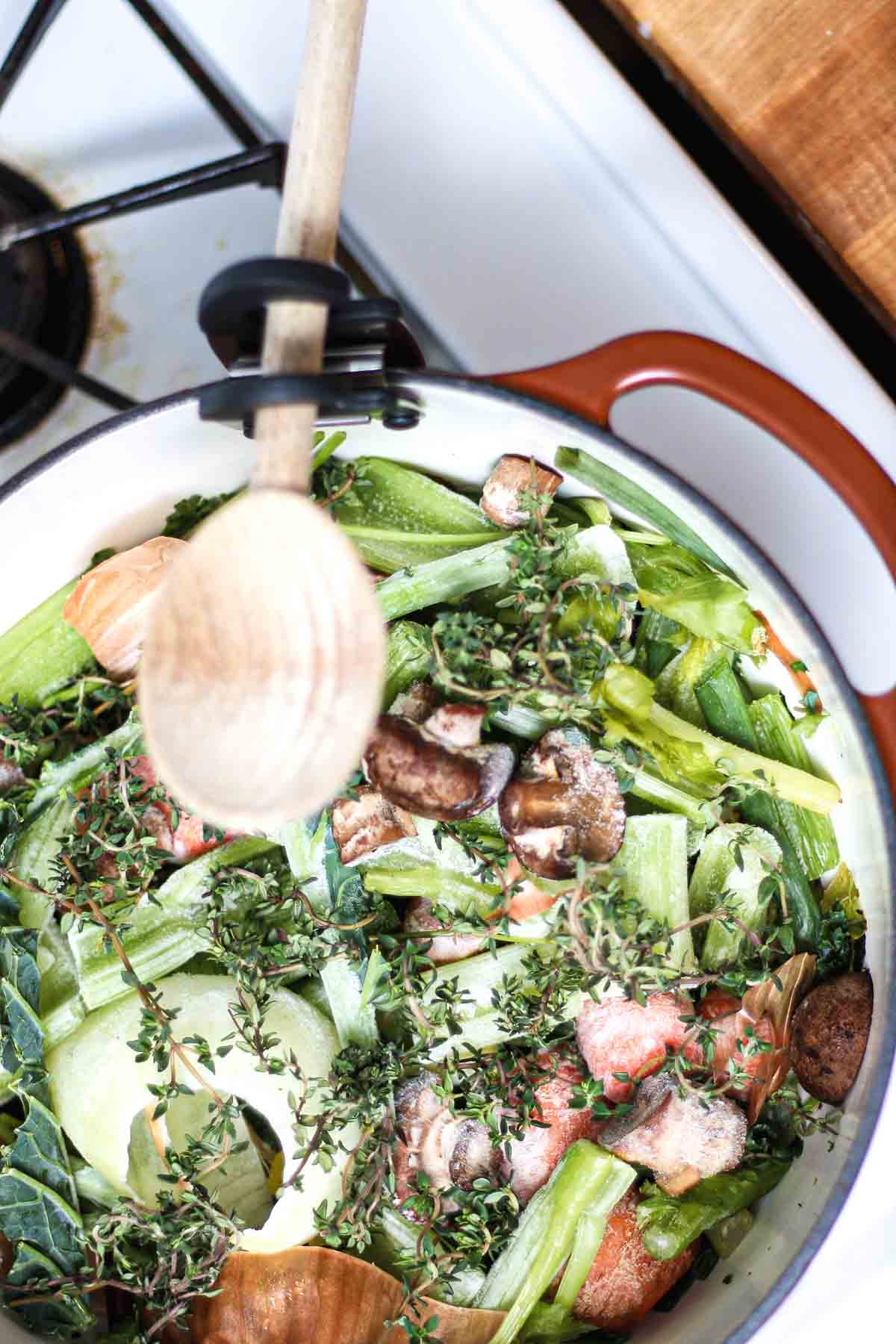
At its core, stock vs. broth comes down to purpose. Stock builds flavor; broth finishes it. Once you know the difference, you can cook more intuitively—layering stock into sauces, soups, and risotto for depth, or reaching for broth when you want something seasoned, balanced, and ready to serve.
Recipes That Use Stock or Broth
- Vegan Split Pea Soup
- Vegan Tom Kha Soup
- Vegan Wonton Soup With Mushrooms
- Vegan Chicken and Rice Soup
Get This Recipe In Your Inbox
Share your email, and we’ll deliver it straight to your inbox.
Plus, enjoy new content every week as a bonus!
Vegan Vegetable Stock
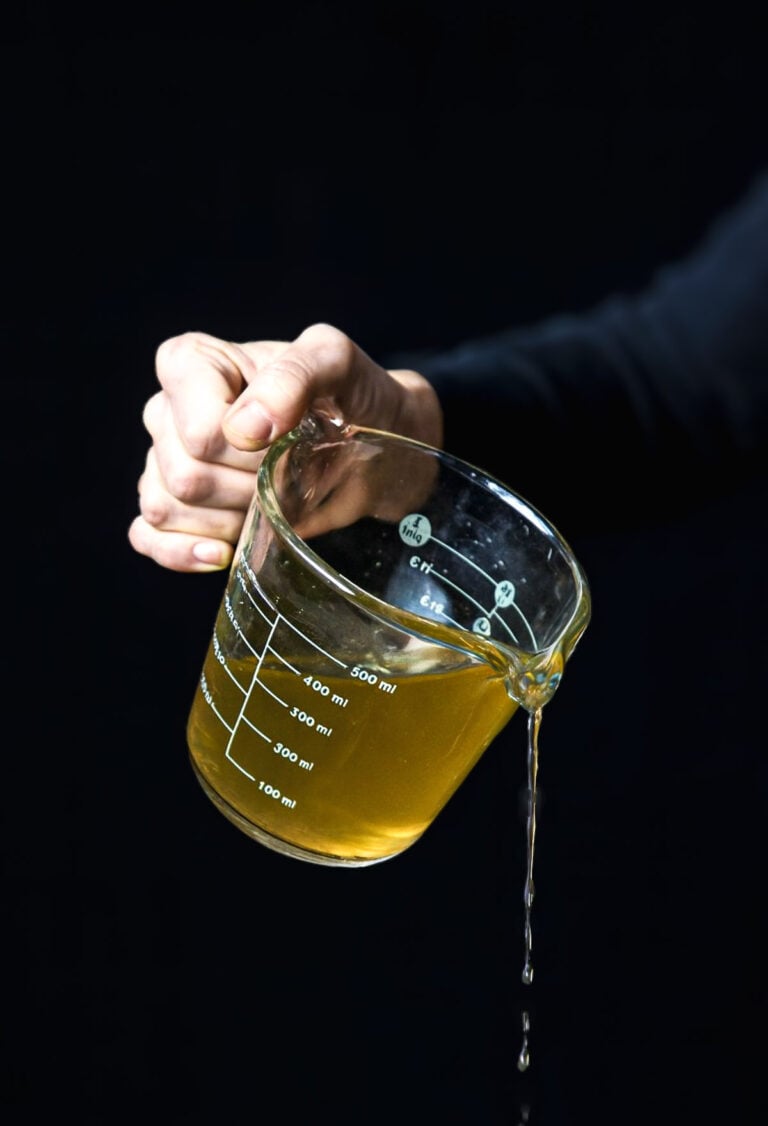
This vegan vegetable stock is simple, versatile, and built from frozen scraps or fresh vegetables you need to use up. A slow simmer pulls out deep, clean flavor and leaves you with a golden base for soups, sauces, and stews—or the perfect starting point for turning into broth.
- Total Time: 1 hour 10 minutes
- Yield: 5-6 cups
Ingredients
About 6 cups mixed vegetables (fresh or frozen scraps), ideally:
- 1–2 cups chopped onion (include ends and skins) or leek ends
- 1 cup chopped celery ribs and leaves
- 1 cup chopped carrots
- 1 cup mushroom stems or caps
- 1 small handful parsley or thyme stems or sprigs
- 2 unpeeled garlic cloves, smashed lightly to release flavor (if using kombu, skip garlic—it can add sharpness)
- 8–10 whole black peppercorns
- 2 bay leaves
- 8 cups cold water, or enough to cover the vegetables by 1-2 inches
Optional, salt-free umami boosters (choose 1–2):
- 1–2 dried shiitake mushrooms
- 1 teaspoon tomato paste
- 1 small strip kombu (remove after 20 minutes)
Instructions
- Load the pot. Rinse vegetable scraps to remove any grit. Add the vegetables, peppercorns, bay leaves, and any optional umami boosters to a large 4–6 quart pot. Pour in the water so it covers the vegetables by 1–2 inches.
- Simmer gently. Bring to a boil over medium heat, then lower to the barest simmer. Skim off any foam. Partially cover and cook for 45–60 minutes, until the vegetables look pale and spent and the stock tastes rich, not bitter.
- Strain. Pour through a fine-mesh sieve. Press gently on the solids to extract more liquid without forcing sediment through.
- Cool fast, store smart. Pour the stock into smaller containers to cool evenly. Once it drops below room temperature, refrigerate uncovered until fully cold, then seal it tight. Store up to 7 days in the fridge or 3 months in the freezer.
Notes
- Keep it unsalted. Salt limits flavor extraction and flexibility. Always season later in the dish or when turning your stock into broth.
- Avoid strong brassicas. Skip broccoli, cabbage, kale, radish, turnip, and cauliflower—long simmering brings out sulfur notes. Beets also tint the stock red, so use them only if color isn’t a concern.
- Best mix. Use mostly frozen vegetable scraps for depth and a handful of fresh aromatics (onion, leek, herbs) for brightness. Freezing ruptures cell walls, helping flavor compounds extract faster and cleaner.
- For richer flavor, brown first. To build a darker, toastier stock, sauté the vegetables in a little oil for 5–7 minutes until golden, or roast them at 425°F (220°C) for about 20 minutes. Then add water and simmer for 30–40 minutes for a darker, toastier stock.
- Slow cooker variation. Add all ingredients plus 8 cups water to a slow cooker. Cook on Low for 4–6 hours, then strain.
- Yield reality. Eight cups of water typically reduces to about 5–6 cups of finished stock after evaporation and absorption.
- Cold water in, gentle heat out. Start with cold water and bring it to a low simmer gradually. This slow rise in temperature pulls out clean, balanced flavor and prevents bitterness or cloudy stock.
- Turn stock into broth. Season one quart (4 cups) of stock with ¾–1 teaspoon kosher salt or 1–2 teaspoons soy sauce, plus a splash of lemon juice or rice vinegar. Simmer for 5 minutes, taste, and adjust before serving.
- Mushrooms are magic. Even a single dried shiitake can double the flavor and umami without adding salt.
- Label and store. Use straight-sided, freezer-safe jars with at least ½ inch of headspace to prevent cracking. Label lids clearly as “stock” or “broth” with the date—future you will thank you.
- Prep Time: 10 minutes
- Cook Time: 1 hour
- Category: Soup
- Method: Simmered
- Cuisine: Global
- Diet: Vegan