Tamari and soy sauce share a shelf but not the same personality. Are they interchangeable? Here’s what sets them apart—and how to know which one belongs in your dish.
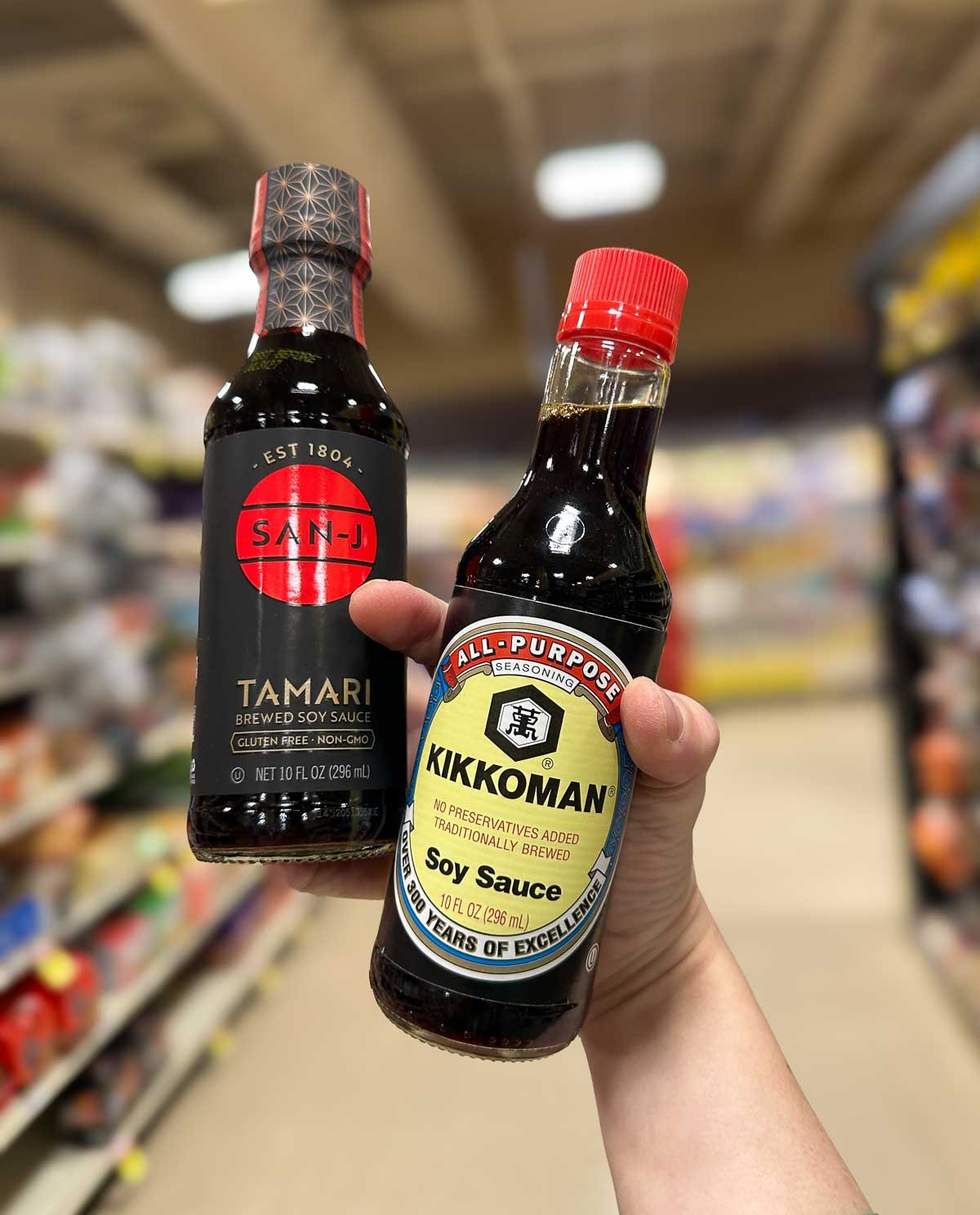
At first glance, tamari and soy sauce look identical: dark, salty, and full of umami flavor. But tamari—a Japanese soy sauce made with little or no wheat—has a smoother, less salty flavor than traditional soy sauce. Knowing the difference between the two can change how a dish behaves once heat gets involved, or how balanced it tastes straight from the bottle.
This guide breaks down the real difference between tamari and soy sauce: how they’re made, how they taste, and when to reach for one over the other. Once you understand what sets them apart, you’ll cook with more intention (and better balance).
What Is Soy Sauce?
Soy sauce is a centuries-old condiment that originated in China and spread throughout Asia in countless regional styles. It’s made by fermenting soybeans, wheat, salt, and water with a mold called koji, then aging the mixture until it develops its signature dark color and layered umami flavor. Traditional soy sauce tastes sharp and salty, with a light-bodied texture that seasons food rather than coating it.
In Japanese cooking, you’ll often see shoyu, a style of soy sauce that balances salt with a slightly sweeter finish. Chinese soy sauces tend to run either lighter and saltier or darker and more molasses-like, depending on their formulation and brewing process. Across all versions, soy sauce adds depth, savoriness, and balance—the kind of flavor that makes rice, teriyaki sauce, noodles, and stir-fries taste alive.
Types of Soy Sauce
Soy sauce isn’t one flavor or shade—it shifts depending on where it’s brewed and what ingredients and techniques are used. Some are light and sharp, meant to season quickly; others are darker and richer, built to coat or deepen color. Each reflects the grains, salt levels, and traditions of its origin.
- Japan: Koikuchi (dark soy) is the everyday staple—balanced, full-bodied, and versatile. Usukuchi (light soy) trades color for sharper saltiness, often used when you want flavor without darkening ingredients. Japanese variants like Shiro (very light) and Saishikomi (double-brewed) offer even lighter and more concentrated notes.
- China: Broadly, light soy is thin and salty for seasoning; dark soy is thicker, sweeter, and used to deepen color and flavor.
- Korea: Ganjang can range from traditional, briny styles (often linked to fermented soybean-and-brine methods) to modernized versions brewed with alternate grains and smoother profiles.
- Indonesia: Kecap manis is sweet, syrupy, and flavored with palm sugar—rich, glossy, and deeply caramelized in character.
What Is Tamari?
Tamari is a Japanese soy sauce that originated as a byproduct of miso fermentation. When soybeans are brewed into miso, the liquid that rises to the top is collected, aged, and refined into what became known as tamari. The name itself comes from the Japanese word tamari, meaning “to accumulate,” a nod to how it first formed during the miso-making process.
Unlike traditional soy sauce, tamari is made with little or no wheat, which gives it a smoother, rounder flavor and a darker, glossier body. Because of that difference, tamari is often labeled gluten-free soy sauce—a key reason it’s popular among those avoiding gluten or preferring a rounder, less sharp flavor. Its fermentation is typically longer and gentler, creating deep umami without the sharp salt edge found in most soy sauces. It clings beautifully to tofu, rice, and noodles, adding savory depth with a softer finish.
Tamari vs. Soy Sauce: Key Differences
They share the same building blocks—soybeans, salt, and time—but the balance of ingredients and process makes them behave differently in the pan. Tamari delivers a deep, mellow umami that feels smooth and rounded, while soy sauce hits faster and sharper with salt and brightness. Here’s how they compare side by side:
Tamari
Soy Sauce
Both sauces bring umami, but in different moods: tamari deepens; soy sauce brightens. Once you know which quality you want in the dish—rounded depth or sharp savoriness—you’ll know which bottle to reach for.
How To Use Each In Cooking
Tamari and soy sauce might seem interchangeable, but they behave differently once they hit heat or starch. Tamari is thicker, silkier, and milder—it builds umami that feels soft and rounded. Soy sauce is thinner and sharper, and seasons fast, bright, and direct. Here’s how to tell which one your dish needs:
Use Tamari When:
- You want gloss and cling. Tamari (a naturally gluten-free soy sauce) has a thicker body that helps it grip tofu, noodles, and roasted vegetables, reducing into a satiny glaze rather than disappearing.
- You’re using it as a finishing touch or dipping sauce. It’s perfect when mellow depth is more helpful than a salt-forward punch.
- You’re cooking something subtle or lightly seasoned. It is ideal for sushi rolls, grain bowls, or steamed vegetables—places where umami should support, not overpower. Try it in these dishes:

Use Soy Sauce When:
- You want fast seasoning and brightness. A splash sharpens stir-fries, fried rice, or brothy soups in seconds.
- You need even distribution. Its thinner body dissolves easily into marinades, dressings, and pan sauces, salting evenly instead of coating.
- You’re chasing edge and snap. Sautéed greens, tofu scrambles, tempeh bacon, noodle soups—anything that benefits from a clean, salty lift. Try it in these dishes:

Substitution tip:
- Replacing soy sauce with tamari? Use a 1:1 ratio. Tamari is slightly less salty, so your dish will taste a bit rounder and less sharp—no need to cut back.
- Replacing tamari with soy sauce? Start with ¾ the amount, then taste and adjust. Soy sauce is saltier and more assertive, so a little less keeps flavors balanced.
In short: Soy sauce cuts. Tamari coats. Both deepen flavor—just in different ways.
Which Should You Choose?
If you’re cooking gluten-free or want a softer, rounder flavor, reach for tamari. If you’re after classic salt and edge, stick with soy sauce. Both bring umami, but they land differently—tamari coats, soy sauce cuts—making each essential in modern vegan cooking.
FAQs
Yes, tamari is a Japanese style of soy sauce made with little or no wheat. It’s traditionally a byproduct of miso fermentation, which gives it a thicker texture and smoother, less salty flavor than regular soy sauce.
Most tamari is gluten-free because it’s brewed without wheat, but always check the label—some brands use small amounts in the fermentation process. If you’re avoiding gluten entirely, look for bottles labeled certified gluten-free tamari.
Yes. If you’re using soy sauce in place of tamari, start with about ¾ the amount—it’s saltier and sharper. When swapping tamari for soy sauce, use a 1:1 ratio for a smoother, rounder flavor that’s slightly less salty.
They’re nutritionally similar. Tamari is often lower in sodium and naturally gluten-free, while soy sauce is higher in salt but just as rich in umami. The “healthier” choice depends on your dietary needs—if you’re watching sodium or avoiding gluten, tamari wins.
Kikkoman makes both tamari and regular soy sauce. Their tamari is brewed without wheat for a gluten-free option, while their standard soy sauce contains about 40–50% wheat. Both deliver umami flavor, but tamari is milder and darker.
Tamari vs Soy Sauce: The Bottom Line
Both tamari and soy sauce start from the same place—soybeans, salt, and fermentation—but they diverge in flavor and intent. Soy sauce hits with sharp umami and salinity; tamari leans smoother, darker, and more rounded. Knowing when to use each turns a dish from balanced to unforgettable. Keep both in your kitchen, and you’ll always have the right kind of umami in reach.