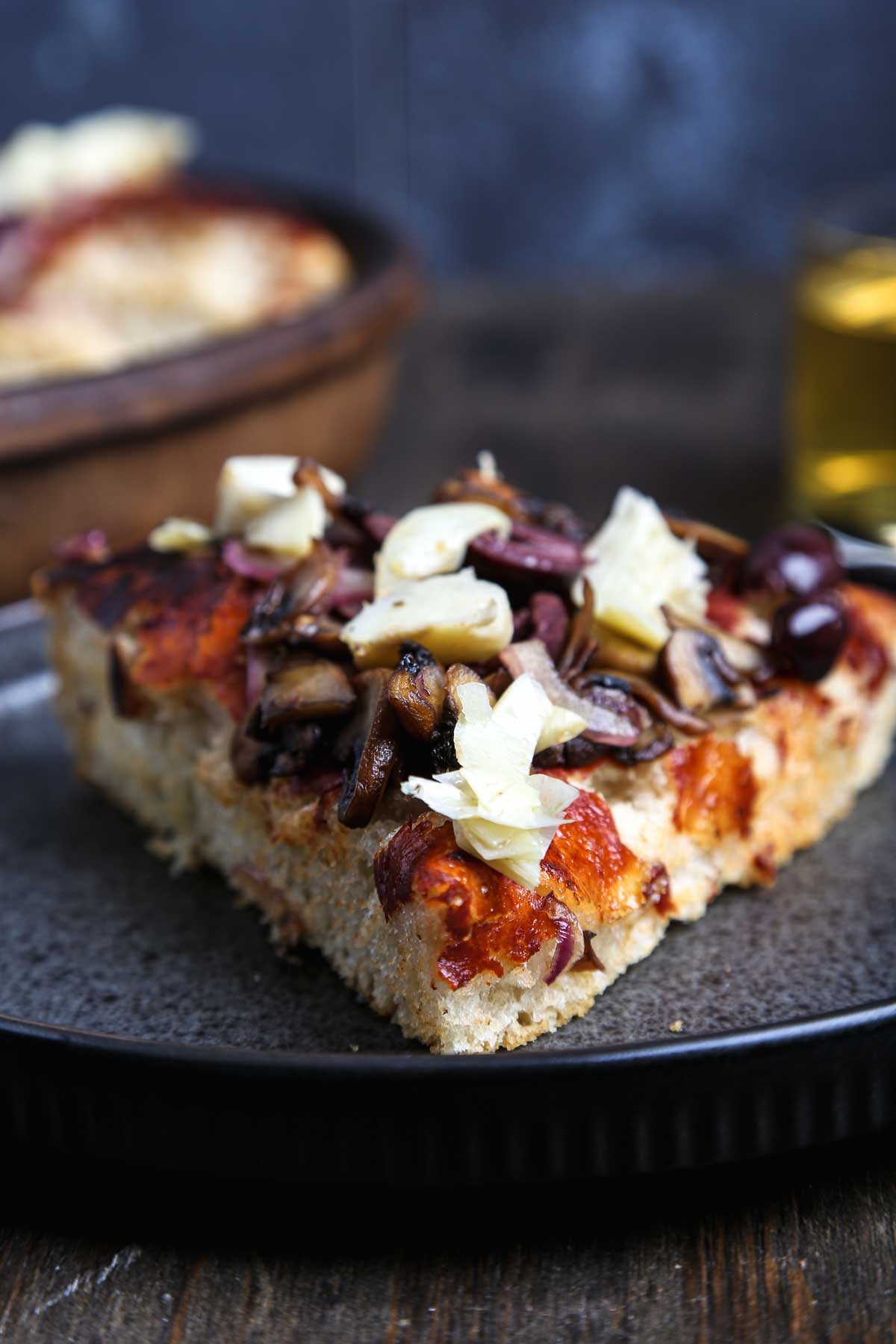
Pizza al padellino is an Italian skillet pizza that bakes up crisp on the outside and soft in the center. If you love the contrast of golden crunch and airy texture, this one delivers.
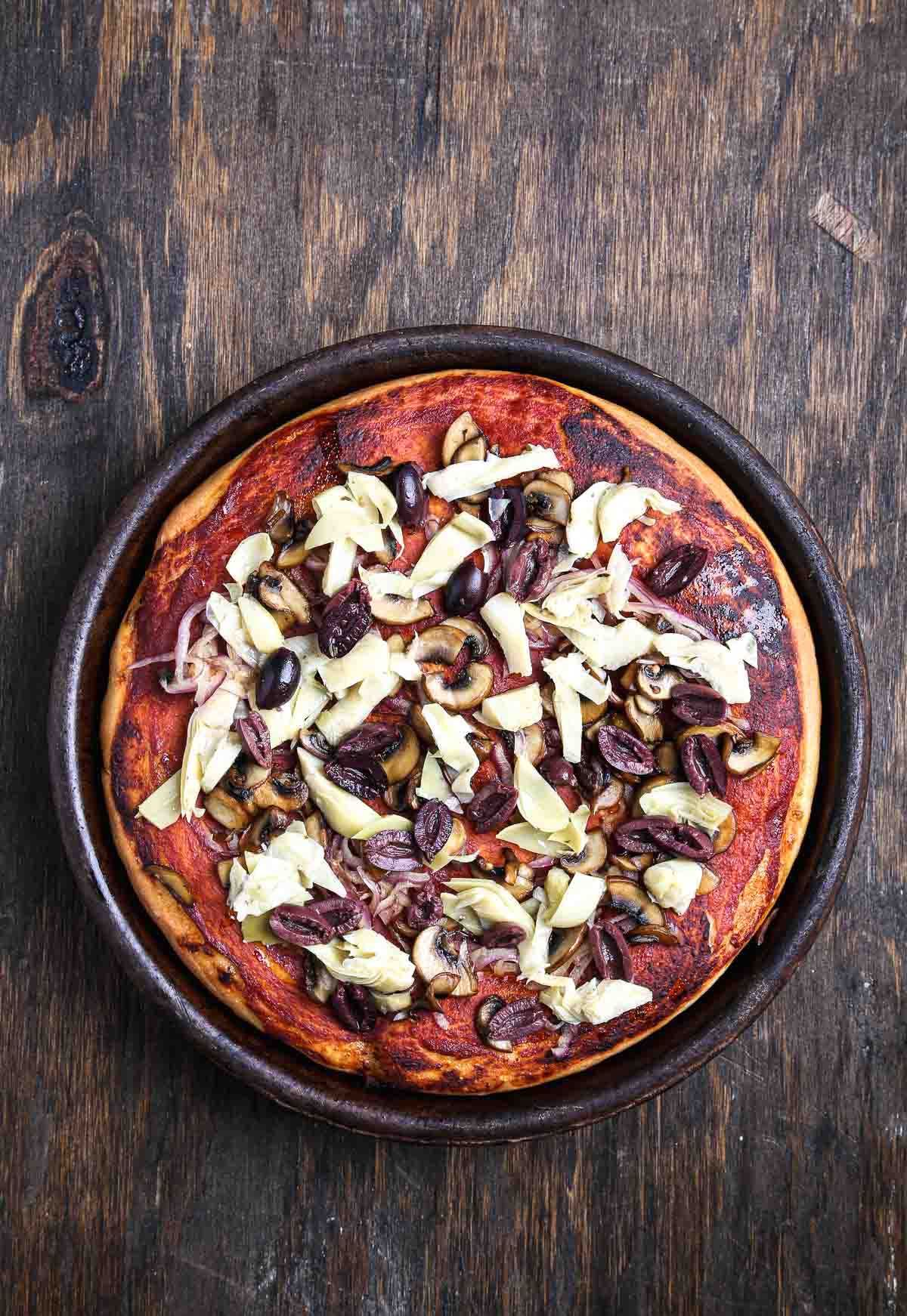
Pizza al padellino is an Italian skillet pizza known for its tall, airy structure and crisp edges. It rises slowly, holds its shape, and bakes up beautifully in a small round pan. This five-ingredient pizza relies on fermentation to build flavor, rewarding patience with a golden crust that’s soft inside, lightly crisp at the edges, and smells beautifully buttery.
In Mastering Italian Breads, Fulvio Marino—Italian breadmaker and former Global Chief Baker for Eataly—spotlights regional baking traditions like this one. In his recipe, the dough rests, rises, and proofs in controlled stages. Shortly after it goes into the oven, your kitchen will be filled with the aroma of golden pizza dough. The first bite builds on that, delivering a soft, airy interior and sturdy, crunchy edges that support simple pizza toppings.
What is Pizza al Padellino?
Pizza al padellino is a traditional pan-baked pizza from Turin in Italy’s Piedmont region, named for the small round pan it’s baked in. The dough rises directly in that pan before baking, which gives it its signature height and defined edge.
Unlike a quick skillet pizza, this version follows a slower rhythm. After its initial rises, the dough is brushed with tomato purée and allowed to proof once more before baking. That final rest helps set the structure, creating a crust that’s tall, airy, and crisp at the edges without feeling heavy.
Key Ingredients
This skillet pizza keeps things simple—just five core ingredients that rely on technique and time to do the heavy lifting.
- All-Purpose Flour: The structure of this dough comes from standard all-purpose flour, which gives the finished pizza enough strength to rise tall in the pan while still staying tender inside.
- Fresh Brewer’s Yeast: The original recipe calls for fresh yeast, a traditional choice in Italian baking that supports a steady, controlled rise. If fresh yeast isn’t readily available where you live, active dry yeast can be used with a simple adjustment (see notes below).
- Warm Water: Water activates the yeast and brings the dough together. At roughly 60% hydration, the dough stays manageable while still developing an airy interior.
- Extra Virgin Olive Oil: Olive oil adds subtle richness and helps create that lightly crisp, golden edge where the dough meets the pan.
- Salt: Salt enhances flavor and strengthens the gluten structure, helping the dough hold its height during the final rise and bake.
Fresh Yeast vs. Active Dry Yeast
Marino’s recipe calls for fresh brewer’s yeast, which is commonly used in Italian baking but can be harder to find in U.S. grocery stores. I used active dry yeast with the same rise times and had excellent results—the dough was smooth after kneading, rose steadily, and baked up tall and tender as written.
To substitute, use 4 grams (about 1¼ teaspoons) active dry yeast in place of 12 grams fresh yeast. Dissolve it in warm water (about 100–105°F) before mixing it into the dough.
If you’re unsure whether your yeast is still active, you can test it first. I walk through a simple 10-minute method in my guide on how to tell if yeast is good.
A Few Notes Before You Begin
This dough is simple and rewards patience. Here are a few tips and cues to look out for:
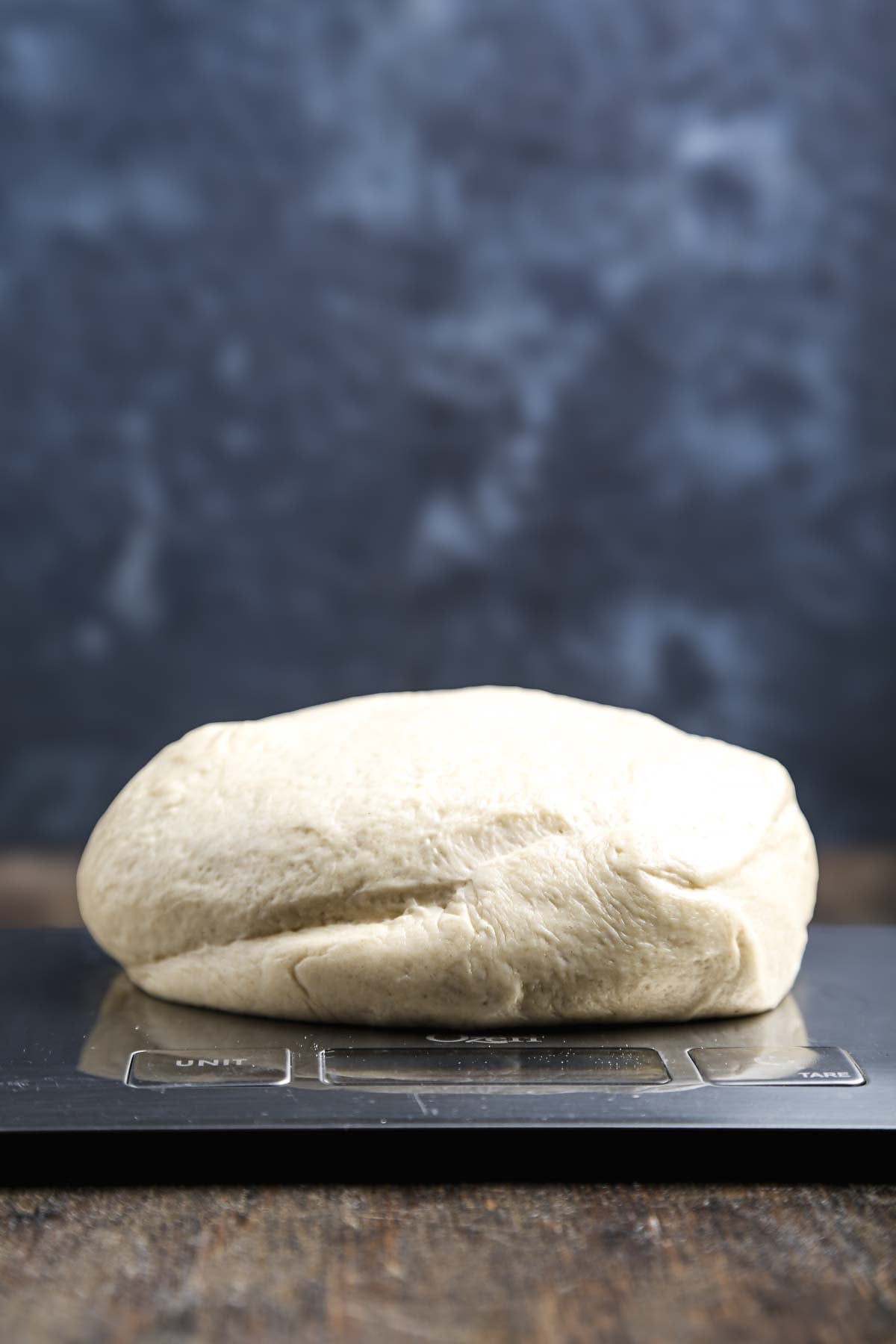
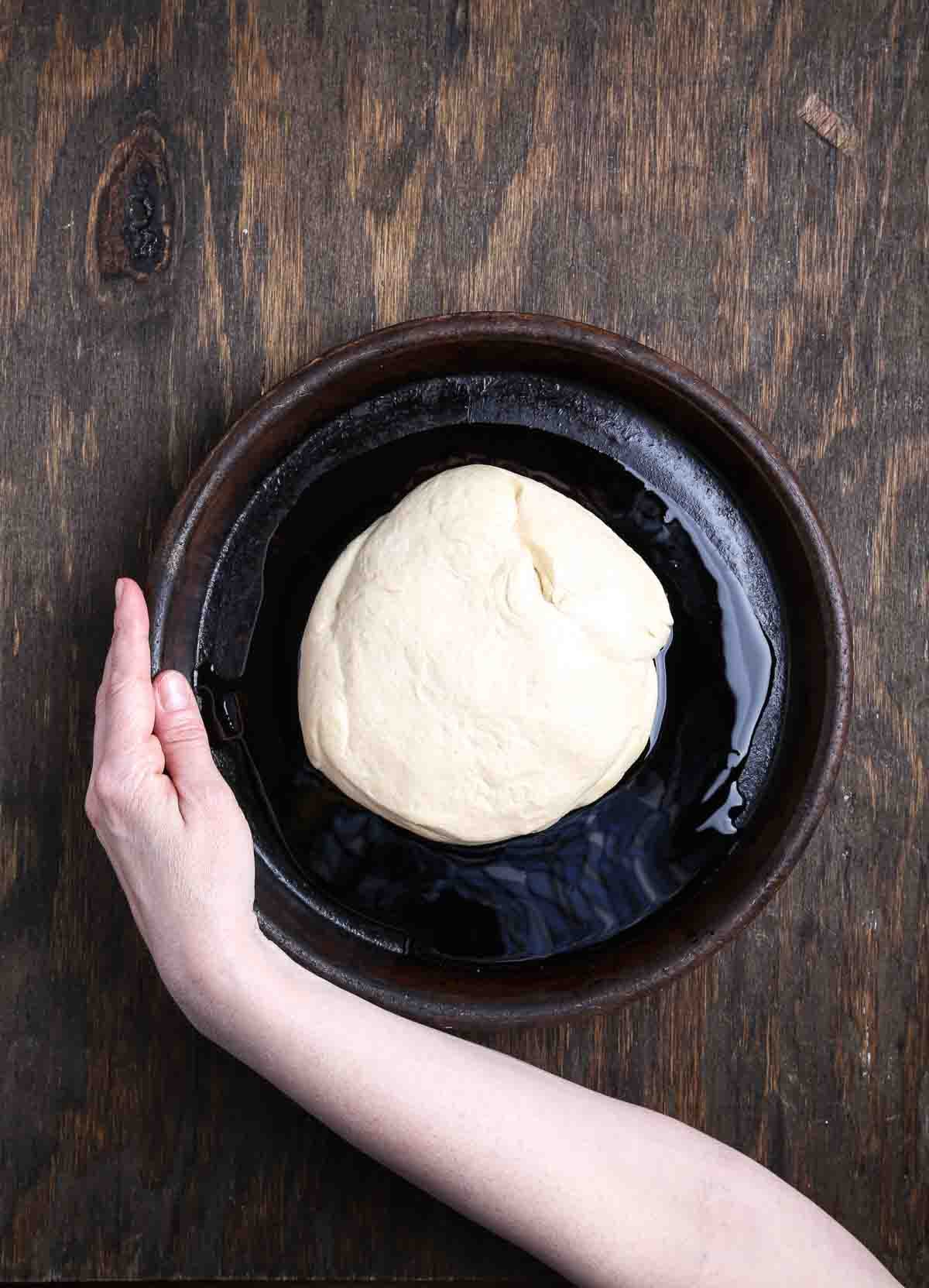
- Knead until smooth and supple. After about 10 minutes, the dough should feel elastic and cohesive, not sticky. It should spring back lightly when pressed.
- Let the rises do the work. The height and structure come from patience. Don’t rush the rest times—steady fermentation is what gives this pizza its light interior and defined edge.
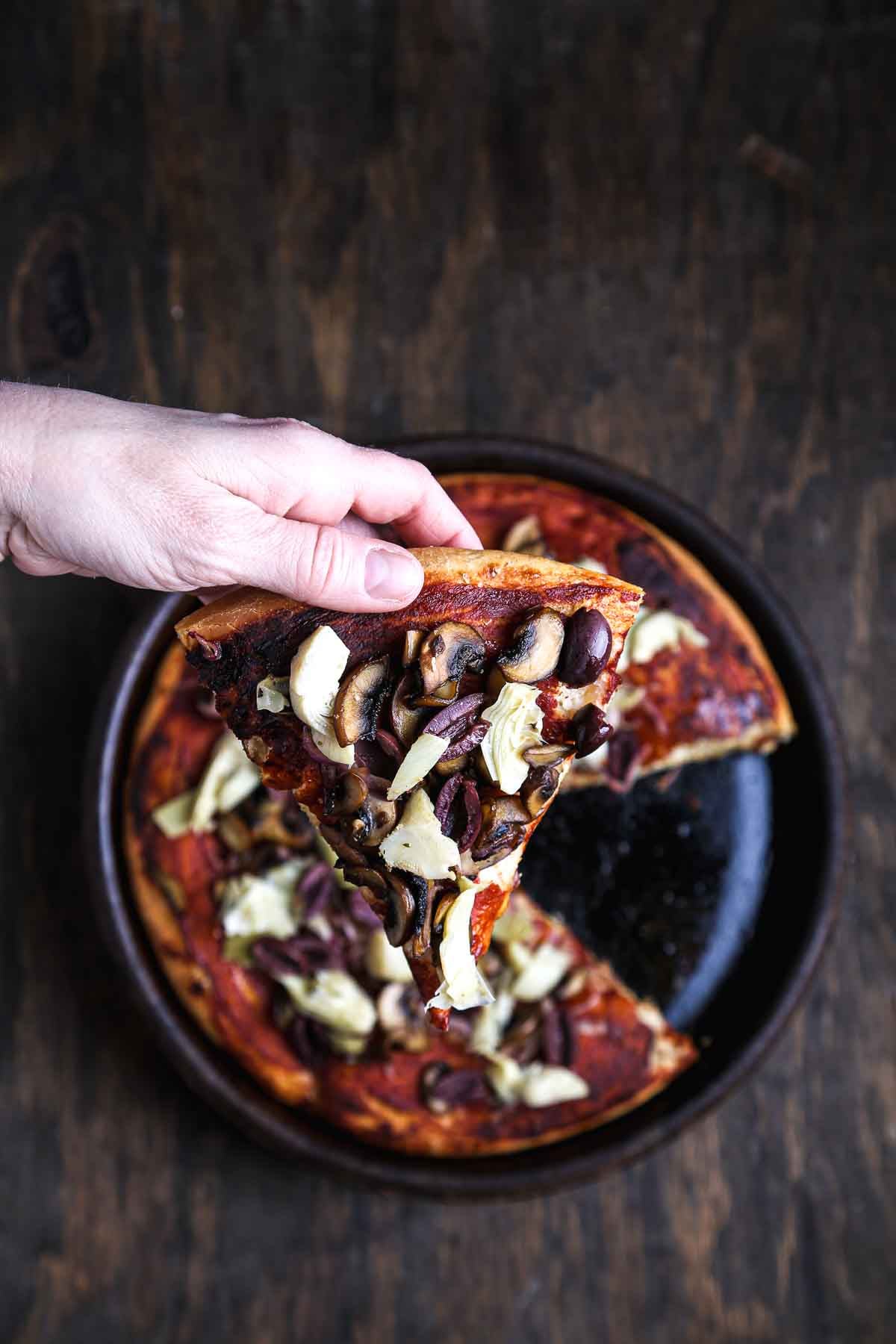
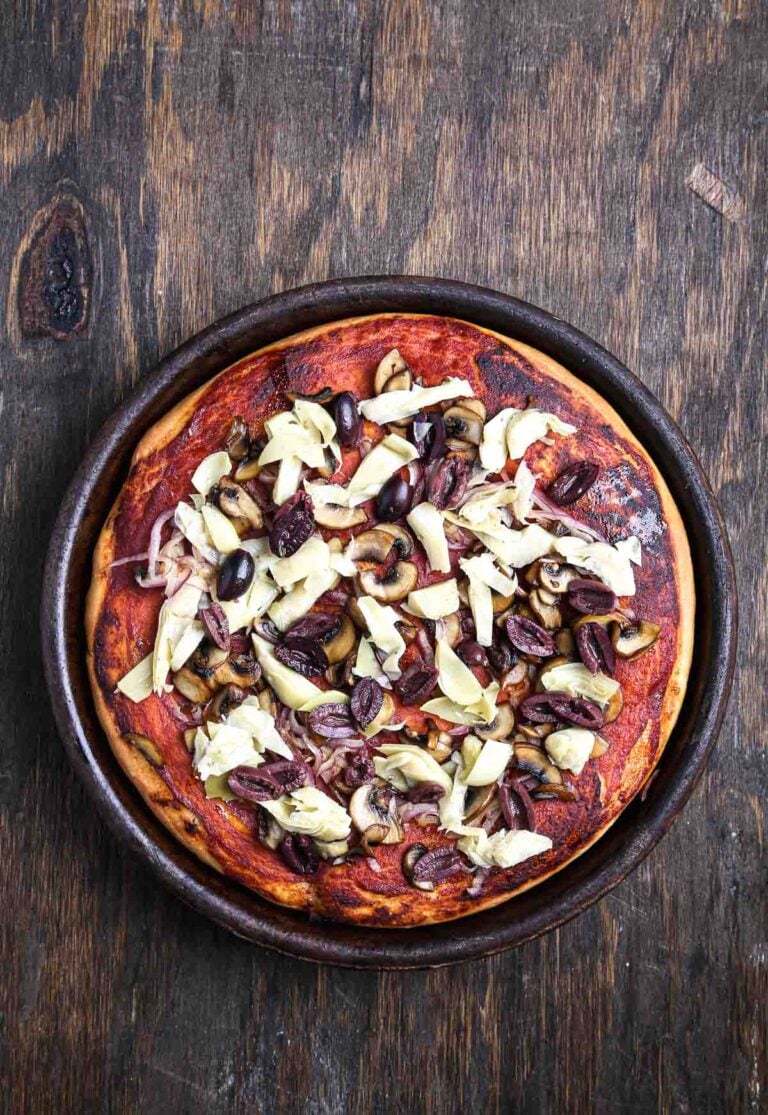
- Keep toppings simple. In this style, the tomato purée goes on before the final proof, and additional toppings are added after baking. Let the crust stay the focus.
- Pan choice matters. Traditional pizza al padellino is baked in small round metal pans. I tested one in a 9-inch cast iron pan and one in a 9-inch pizza stone with excellent results—the edges crisped beautifully.
- Reheating tip. Leftovers reheat well in an air fryer at 350°F for 4–6 minutes, restoring the crunch while keeping the interior soft.
About Mastering Italian Breads
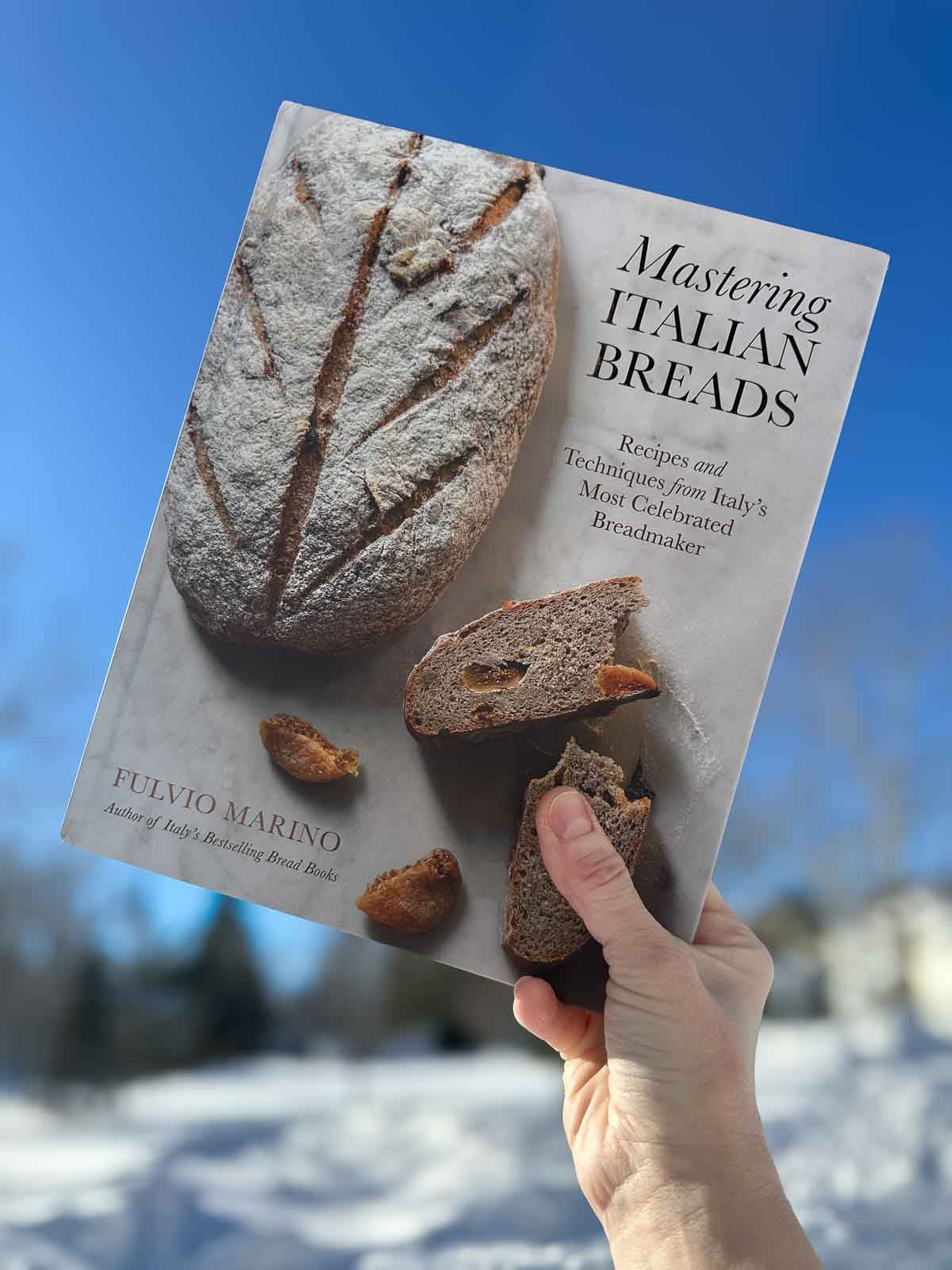
In Mastering Italian Breads, Fulvio Marino begins with the foundations—wheats, grains, fermentation styles, and the mechanics behind different doughs—before moving into recipes organized by region across Italy. He places clear emphasis on understanding where ingredients are grown and the hands involved in growing and baking them, grounding the technical instruction in place and practice.
While not a vegan cookbook, many of the core dough recipes are naturally free of animal products, and several fillings and toppings can be easily adapted with plant-based swaps.
About Fulvio Marino
Fulvio Marino was born in Canelli (Asti), Italy, and grew up in his family’s milling business, Mulino Marino, where he continues to work today. Alongside his role in flour production, he runs the bakery FuocoFarina in Alba and appears regularly on Italian television as a baking instructor and judge. His perspective carries the through-line of miller to baker to teacher, which gives his recipes both technical clarity and a strong sense of place.
FAQs
Yes. While the original recipe calls for fresh yeast, active dry yeast works well with a simple conversion. Use about one-third the weight (for example, 4 grams active dry in place of 12 grams fresh), and dissolve it in warm water before mixing it into the dough. Allow the full rise times, and focus on how the dough looks and feels.
Rising directly in the pan gives this pizza its signature height and defined edge. Instead of stretching and baking immediately, the dough proofs in place, which helps it expand upward and set its structure before hitting the oven. That final rise—after brushing with tomato purée—contributes to the tall, tender interior that distinguishes this style from thinner pan pizzas.
The height comes from proper kneading and patient fermentation. Knead until the dough is smooth and elastic, then allow each rise to fully develop so the gluten network can strengthen and trap gas. When shaped into the pan, the dough should feel airy and slightly buoyant. Rushing the proofing stages is the quickest way to lose that light, structured interior.
More Italian-Inspired Bread Recipes to Try Next
Get This Recipe In Your Inbox
Share your email, and we’ll deliver it straight to your inbox.
Plus, enjoy new content every week as a bonus!
Pizza al Padellino (Skillet Pizza)
Reprinted with permission from Mastering Italian Breads Copyright © 2026 by Fulvio Marino. Published by Harvard Common Press.
This pizza al padellino is a traditional Italian skillet pizza from the Piedmont region of Italy, made with a soft yet structured dough that rises directly in the pan before baking. The slow, structured fermentation gives it height, tenderness, and crisp, defined edges that make this style distinct.
- Total Time: 3 hours 10 minutes
- Yield: 3, 9-inch pizzas
Ingredients
For the dough
- 1 kg all-purpose flour, plus more for dusting
- 600 g warm water
- 12 g fresh brewer’s yeast
- 40 g extra virgin olive oil
- 25 g salt
Optional toppings
- Tomato purée
- Sliced mushrooms
- Sliced artichoke hearts
- Sliced olives
- Extra virgin olive oil
Instructions
- In a large bowl, mix together the flour, water, yeast, oil, and half of the salt. Using your hands, work the mixture until a smooth dough forms. This should take about 10 minutes. Transfer the dough to a greased bowl, cover, and let rise for 1 hour.
- Divide the dough into three pieces (each should be just over 500 g [1 lb]). Dust your hands with flour and form the dough into balls.
- Grease three round 9-inch (23 cm) pizza pans (a pizza stone will work, as well). Place one dough ball in the center of each prepared pan. Let rise for 30 minutes.
- Next, dust a clean surface with flour. Roll out each dough until it is 9 inches (23 cm) in diameter. Transfer each dough back to its respective pizza pan. Divide the tomato purée evenly among the three pizza crusts. Brush the purée out until each crust is evenly covered. Let rise for 1 hour at room temperature.
- Preheat the oven to 475°F (240°C). Bake each pizza until the dough is cooked through and the outer crust is crispy, about 20 minutes. Top the pizza with the rest of the ingredients, or with whatever toppings you would like, and serve.
Notes
In Turin, Italy, this pizza is known for its tall, thick dough that is baked in the oven inside a small round aluminum (or iron) pan without handles, called a padellino or tegmino. Soft on the inside and crispy on the outside, this pizza dough works well with all kinds of toppings, as seen in this recipe.
- Prep Time: 20 minutes
- Rise & Proof Time: 150 minutes
- Cook Time: 20 minutes
- Category: Dinner
- Method: Baking, Kneaded, Proofing
- Cuisine: Italian
- Diet: Dairy-Free, Vegan, Vegetarian