
This vegan miso soup is warm, savory, and built from a kombu-and-shiitake dashi that’s simple to make. Stir in the miso off the heat, and you’ve got a clean, comforting bowl you can keep classic or build into a full meal.
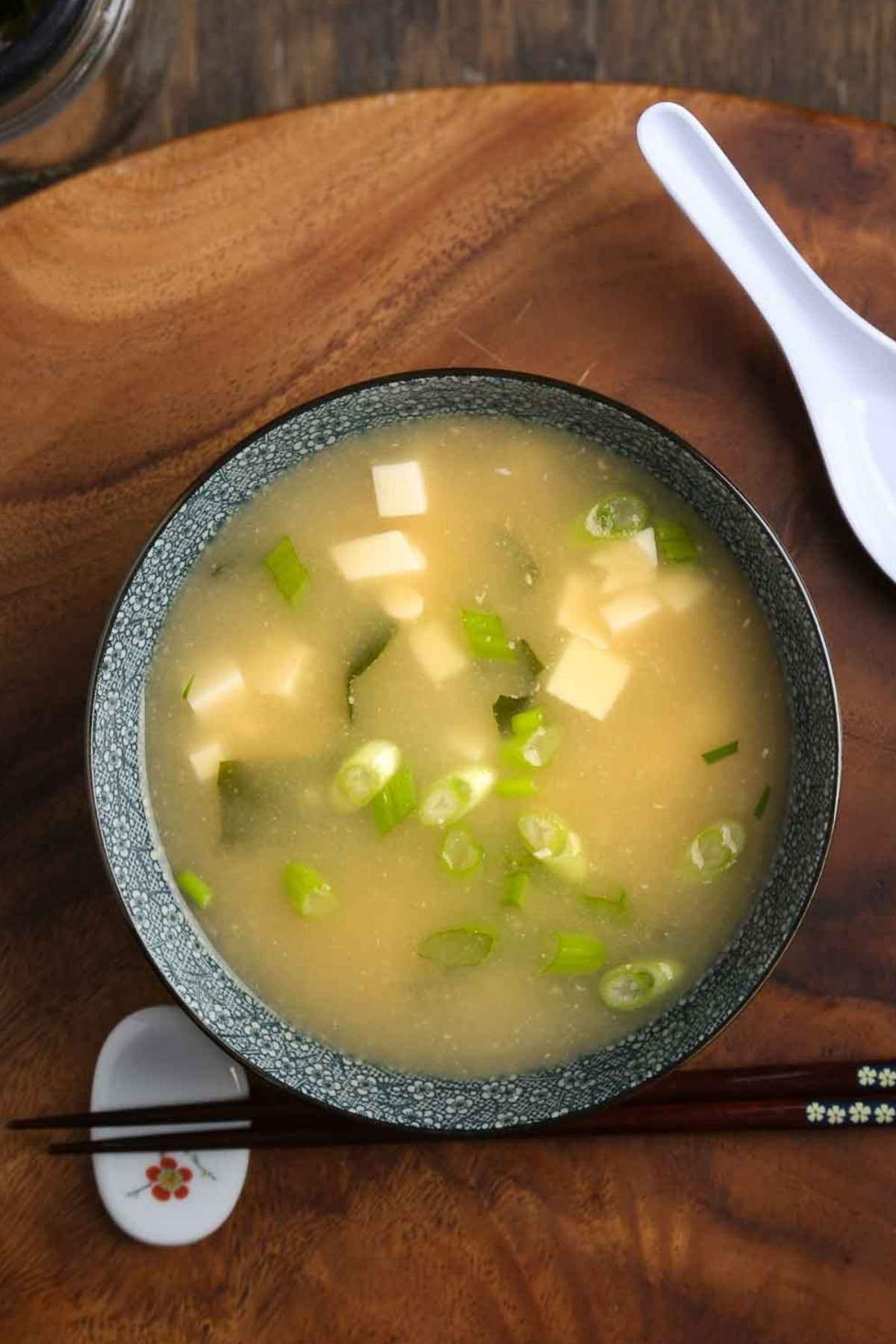
If you love miso soup but rarely order it out because the broth usually contains fish stock or bonito, same. Making it at home lets you skip the guesswork and control the ingredients, and a quick steep of kombu and dried shiitakes gives you a clean, savory base without any animal products.
This version keeps the process easy. The kombu–shiitake dashi steeps passively in the background, and adding the miso off the heat protects its balance and aroma. The result is a bowl that tastes clean and comforting, whether you keep it simple or build it into something more substantial.
From there, it’s all preference. Keep it simple with wakame, soft tofu cubes, and scallions, or add mushrooms or greens if you want something more substantial. This vegan miso soup can be ready in minutes if you use dashi powder, or in about 20 minutes if you make the kombu–shiitake dashi from scratch.
What Is Dashi?
Dashi is a light, savory broth that forms the base of most miso soup. It’s known for its clean umami flavor, which gives the soup depth without heaviness. Traditional dashi is often made with kombu (dried kelp) and bonito flakes, but there are excellent plant-based options that work just as well in a vegan kitchen.
For this vegan miso soup, dashi is made by steeping kombu and dried shiitake mushrooms in water. Kombu provides a gentle, oceanic savoriness, while dried shiitakes add a deeper, earthy layer of umami. Together, they create a balanced broth that tastes rich and satisfying without any fish or animal products.
There are a few easy ways to make vegan dashi for miso soup at home, depending on how much time you have. You can do a quick hot steep on the stovetop, an overnight cold steep in the refrigerator, or use vegan dashi powder for an instant shortcut. All three methods produce a flavorful base for miso soup—the best option is simply the one that fits your schedule.
Why You’ll Love It
This vegan miso soup keeps the comfort and depth you expect from classic miso soup—without fish stock or bonito. It’s simple, flexible, and built around ingredients that deliver real umami. Here’s why you’ll love it:
- Savory vegan broth with real depth: Kombu and dried shiitakes create a clean, balanced dashi that tastes rich without heaviness.
- Simple ingredients, big umami payoff: A short list of pantry staples delivers the savory flavor miso soup is known for.
- Easy to customize: Keep it classic with wakame, tofu, and scallions, or add mushrooms or greens to make it more filling.
- Flexible dashi options: Use a quick hot steep, an overnight cold steep, or vegan dashi powder, depending on your schedule.
- Works any time of day: Light enough for breakfast, soothing enough for lunch, and comforting enough for dinner.
Key Ingredients
This vegan miso soup is built from a short list of ingredients, but each one plays a specific role in building flavor. Here’s what you need—and why it matters.


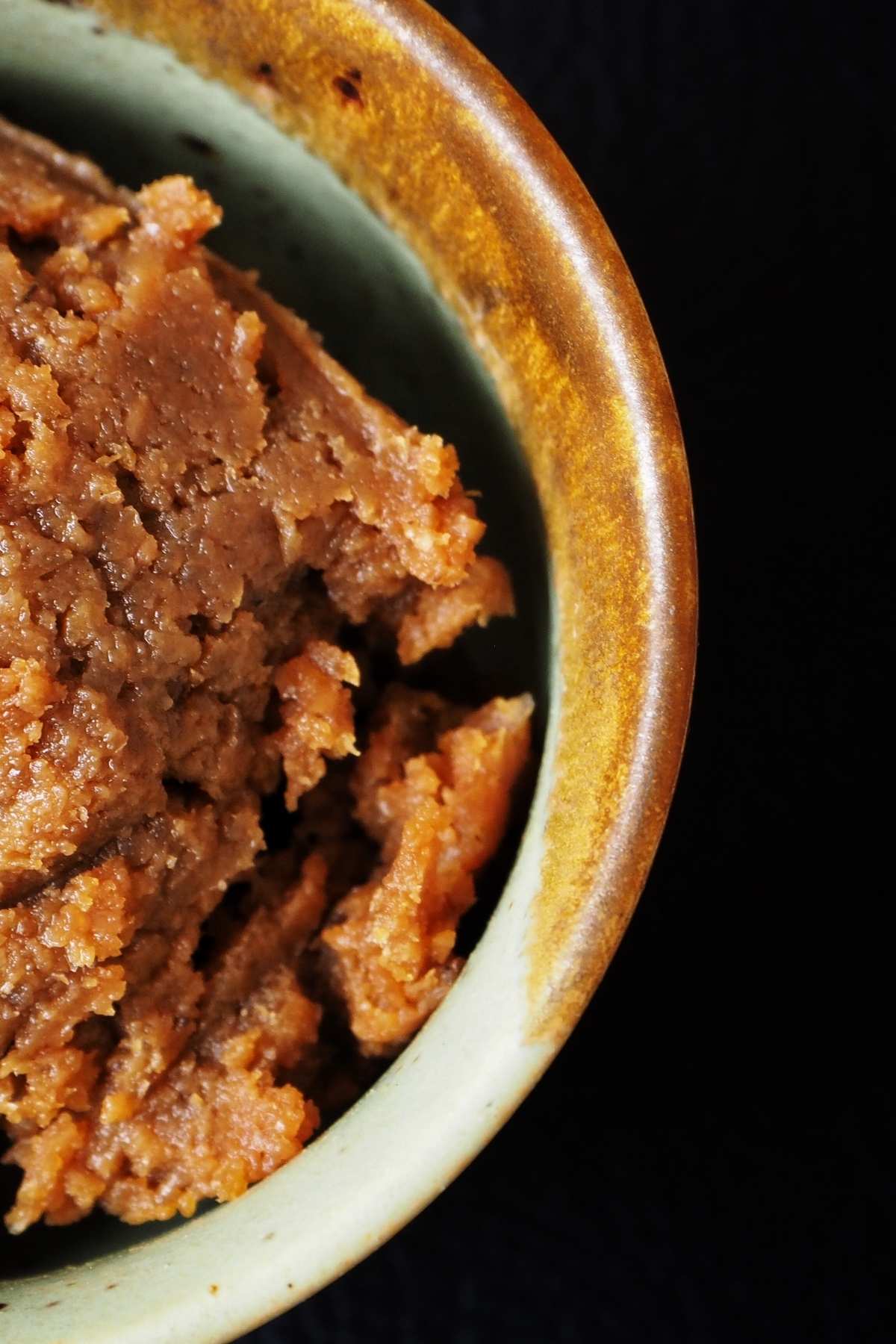
- Kombu (dried kelp): Kombu forms the backbone of vegan dashi. When gently steeped in water, it releases a subtle, savory depth that gives miso soup its clean umami base. You’ll remove it before serving; it’s there to flavor the broth, not stay in it.
- Dried shiitake mushrooms: Dried shiitakes add a deeper, earthier layer of umami to the broth. As they rehydrate, they enrich the dashi and can be sliced and added back into the soup for extra texture if you’d like.
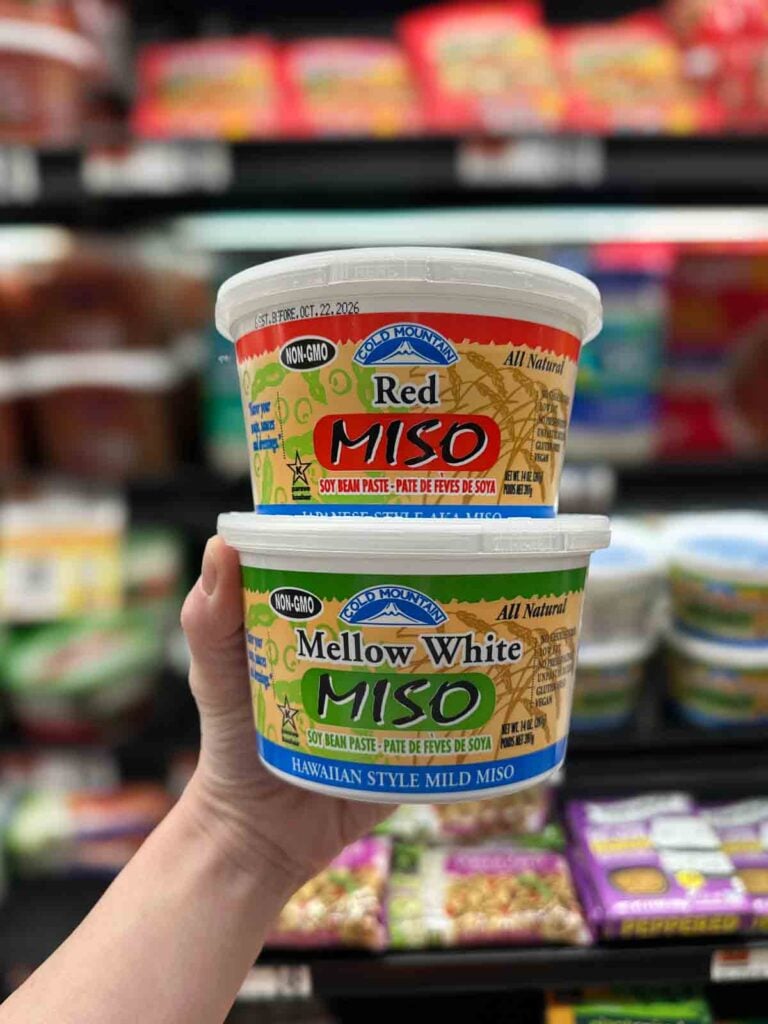
- Miso paste: Miso is the soul of the soup. It’s fermented, savory, and slightly salty, with flavors that vary by type. Always whisk miso into the soup off the heat. Boiling dulls its flavor and aroma. Take a look at our guide on how to use miso paste for more tips and ideas.
- White miso: mild and slightly sweet
- Yellow miso: balanced and versatile
- Red miso: deeper and more assertive
- Wakame: Wakame is a dried seaweed that rehydrates quickly in cold water and adds a light, briny note to the soup. A small pinch goes a long way—it expands dramatically as it softens. Drain well before adding.
- Tofu: Soft or silken tofu adds gentle protein and a custardy texture. Since tofu doesn’t need cooking, it’s added at the end to warm through without breaking apart.
- Scallions: Fresh scallions add brightness and contrast, balancing the richness of the broth.
- Shortcut Option: Vegan Dashi Powder: If you don’t have time to make kombu–shiitake dashi, vegan dashi powder is a convenient alternative. Dissolve it in hot water according to the package instructions, then proceed with the recipe as written. The flavor is lighter but still clean and savory.
- Optional Add-Ins: This base is flexible. You can add: Fresh mushrooms (like shiitake, oyster, or enoki) and wilted spinach, or other greens. Add these just before serving to keep their texture fresh.

How to Make Vegan Miso Soup
Making vegan miso soup is simple once you know the rhythm: build the dashi, dissolve the miso, then finish with your add-ins. Here’s how it comes together step by step. For full recipe instructions, scroll to the end of this post.
Step 1: Prepare the Kombu – Gently wipe the kombu with a damp cloth to remove any surface debris—do not rinse it. The naturally occurring white bloom on kombu is rich in umami and should be left intact.
Step 2: Make the Vegan Dashi – You have three options for making vegan dashi, depending on your schedule.
- Option 1: Hot Dashi (about 20 minutes) – Add the kombu and dried shiitake mushrooms to a saucepan with water. Heat slowly over medium-low until the liquid is hot and fragrant, but do not let it boil. Just before boiling, remove the kombu and mushrooms. The broth should taste clean and savory.
- Option 2: Cold Dashi (overnight) – Combine the kombu, dried shiitakes, and water in a container. Cover and refrigerate for about 12 hours. The result is a smooth, gentle broth that can be warmed before using.
- Option 3: Instant Vegan Dashi – If you’re short on time, dissolve vegan dashi powder into hot water according to the package instructions. This option is fast and reliable, though slightly lighter in flavor.

Step 3: Add the Miso – Once the dashi is hot, remove it from the heat. Dissolve the miso separately in a ladle or fine-mesh strainer using some of the hot broth, then stir it back into the pot.
Adding miso off the heat keeps its flavor balanced and aromatic. Avoid boiling the soup after the miso is added, as high heat dulls its character.
Step 4: Finish the Soup – Ladle the miso soup into bowls and add the rehydrated wakame, cubed tofu, and chopped scallions. The soup is ready to serve immediately.
From here, you can keep it classic or add extras like sliced mushrooms or wilted greens, depending on how hearty you want the bowl to be.
Serving Suggestions
Vegan miso soup is one of those flexible dishes that fit easily into almost any meal. Light but savory, it works just as well on its own as it does alongside other dishes. Here are a few easy ways to serve it, depending on the moment.
- As a light meal or starter: A bowl of vegan miso soup makes a simple, comforting meal on its own—especially when you add tofu, wakame, or extra vegetables. It also works beautifully as a starter before a larger dinner, setting the tone without feeling heavy.
- With rice or sushi: Serve miso soup alongside steamed rice or vegan sushi rolls for a balanced, satisfying meal. It pairs especially well with vegetable rolls, sweet potato tempura sushi, or avocado-based rolls.
- Alongside tofu or vegetable dishes: Miso soup complements tofu dishes particularly well. Try serving it with sesame-glazed tofu, crispy tofu, or sautéed vegetables for a warm, savory contrast.
- As a simple breakfast or lunch: Because it’s light and warming, miso soup is an easy option for breakfast or lunch when you want something savory but not filling. It’s especially nice on colder days or when you want a gentle way to start your day.
Storage & Make-Ahead Tips
Vegan miso soup is best enjoyed fresh, but with a few simple adjustments, it’s easy to prep parts of it ahead of time.
- Store the broth separately: If you’re making miso soup in advance, store the kombu–shiitake dashi on its own. The broth will keep well in the refrigerator for up to 3–4 days or can be frozen for longer storage. Reheat it gently before using.
- Add miso just before serving: Miso tastes best when it’s added at the end. When reheating stored broth, warm it until hot but not boiling, then whisk in the miso right before serving to keep the flavor balanced and aromatic.
- Handle wakame and tofu at the end: Rehydrate wakame in cold water just before serving. Wakame continues to soften as it sits and can become overly tender if stored in the soup. Tofu should also be added fresh; it doesn’t need cooking, just gentle warming.
- Use leftover shiitakes thoughtfully: Once dried shiitakes have softened, you can slice them and add them directly to the soup before serving. Any extra rehydrated mushrooms can be stored separately in the refrigerator for a few days and used in stir-fries or homemade stock or broth for a zero-waste option.
FAQs
Miso soup can be vegan, but many restaurant versions are not. Traditional miso soup is often made with dashi that contains fish or bonito flakes. This vegan miso soup uses a kombu-and-shiitake dashi instead, making it completely plant-based.
Any miso you enjoy can work in vegan miso soup. White miso is mild and slightly sweet, yellow miso is balanced and versatile, and red miso has a deeper, more robust flavor. Because miso varies in saltiness and strength, start with a smaller amount and adjust to taste.
Yes, with a small adjustment. It’s best to make and store the dashi separately, then add the miso just before serving. The broth can be refrigerated for several days or frozen on its own. Reheat gently, then whisk in fresh miso and add tofu and wakame right before serving.

More Recipes That Use Miso
- Sautéed Miso Portobello Mushrooms
- Miso-Glazed Shiitake Mushrooms
- Vegan Ramen
- Vegan Chicken and Rice Soup
If you tried this vegan miso soup, we’d love it if you’d leave a rating and feedback. It helps others find our content, and hearing from you makes our day!
Get This Recipe In Your Inbox
Share your email, and we’ll deliver it straight to your inbox.
Plus, enjoy new content every week as a bonus!
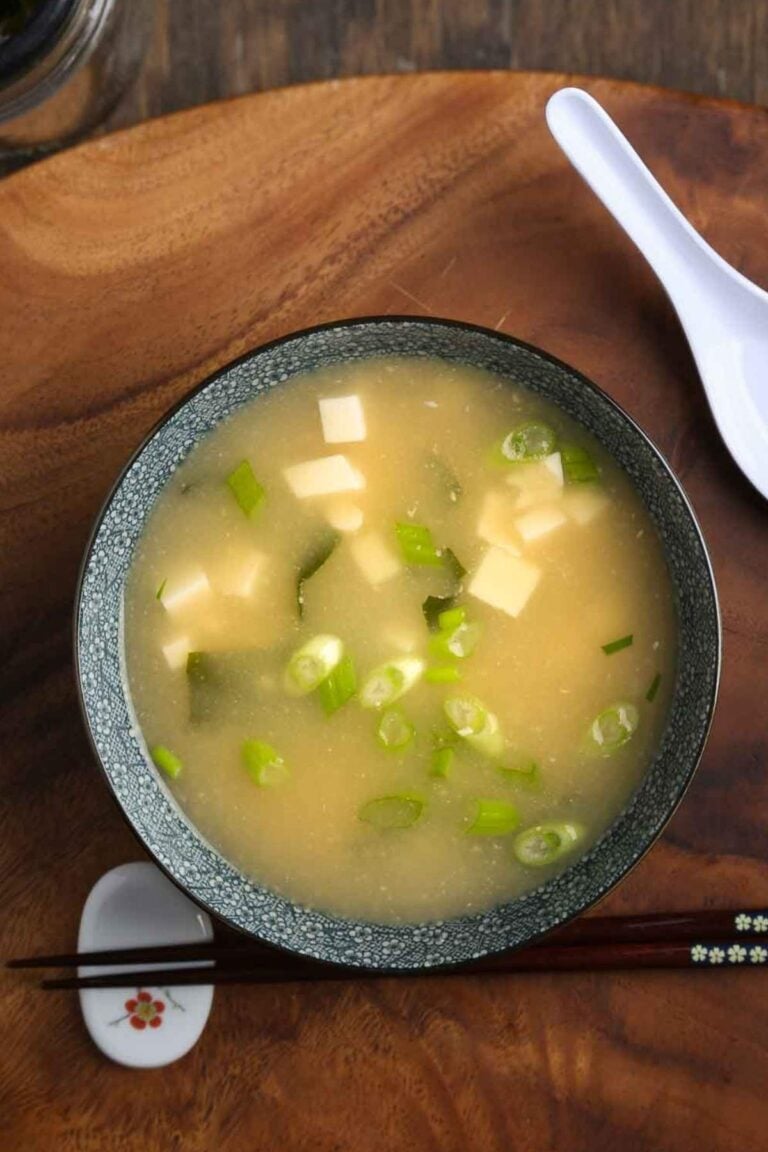
Easy Vegan Miso Soup
This vegan miso soup uses a quick kombu-and-shiitake dashi for clean, savory depth. Stirring in the miso off the heat preserves its balance and aroma. Add tofu, scallions, or mushrooms for a simple, customizable comfort bowl.
- Total Time: 30 minutes
- Yield: 2 servings
Ingredients
For the vegan dashi
- 1 piece kombu (about 3X3 inches)
- 4 cups filtered water
- 4 dried shiitake caps
To finish the soup
- 1/2 tablespoon miso paste per cup of dashi (any variety you like)
- Small pinch dried wakame, rehydrated in cold water for 3 minutes and drained
- 8 ounces soft or silken tofu, cubed (no need to heat)
- 1 scallion, thinly sliced
Optional add-ins
- Fresh mushrooms (shiitake, oyster or enoki)
- wilted spinach or other tender greens
Instructions
Prep the kombu
- Gently wipe the kombu with a damp cloth to clean it—do not rinse.
Make the dashi
Hot Dashi (Option 1)
- Add the water, kombu, and dried shiitakes to a saucepan.
- Heat gently over medium-low until the liquid is hot and fragrant, but do not let it boil.
- Steep for about 20 minutes, then remove the kombu and shiitakes.
- Slice the mushrooms and reserve if you’d like to add them to the soup.
Cold Dashi (Option 2)
- Combine the water, kombu, and dried shiitakes in a container.
- Cover and refrigerate for about 12 hours.
- Remove the kombu and shiitakes before using, then warm the broth gently on the stovetop.
Instant Dashi (Option 3)
- Dissolve vegan dashi powder into hot water according to the package instructions.
Add the miso
- Remove the dashi from the heat.
- Dissolve the miso in a ladle or fine-mesh strainer using some of the hot broth, then stir it back into the pot.
- Do not boil after adding the miso.
Finish the Soup
- Ladle the miso soup into bowls and add the rehydrated wakame, tofu, scallions, and any optional add-ins. Serve immediately.
Notes
- Don’t boil the miso: Add it off the heat to keep the flavor balanced and aromatic.
- Adjust miso to taste: Start with ½ tablespoon per cup of dashi and add more if you want a stronger flavor.
- Store the broth separately: Kombu–shiitake dashi keeps for 3–4 days in the refrigerator. Reheat gently, then add miso fresh.
- Rehydrate wakame just before serving: This keeps the texture tender, not overly soft.
- Use the shiitakes: Slice the rehydrated mushrooms and add them to the soup, or save them for stir-fries or other brothy dishes.
- Prep Time: 10 minutes
- Cook Time: 20 minutes
- Category: Breakfast, Dinner, Lunch
- Method: Simmered, Steeped
- Cuisine: Japanese-inspired
- Diet: Vegan
This recipe was originally posted in 2015 and updated in 2025 with a deeper dive into ingredients and added serving suggestions.



This recipe looks amazing! Cannot wait to try!
I always want miso soup, but I never seem to have the wherewithal to make it. This should help, thanks!
i have kombu in my pantry, purchased on a whim, that i add to make stock in general. i also always have miso on hand now and never knew about adding it later. good to know!
Thanks for the great tip about miso … I have not been adding it at the end, so have been losing it's beneficial properties. I've been using a yummy chick pea miso …. sometimes I just eat a little spoon of it right out of the jar mmmm … thank you so much for all the time you devote to providing these amazing recipes … with gratitude, Brenda
Nice recipe, and good tip on not letting the miso paste get too hot. Thanks!