This vegan ravioli dough is made for filled pasta: it rolls thin without tearing, seals easily, and stays tender once cooked. It’s egg-free, built with silken tofu for even hydration and structure, and designed to make homemade ravioli feel doable from the start.
You don’t need eggs to make great ravioli dough. For filled pasta, what matters most is a dough that rolls thin without tearing, seals cleanly around a filling, and stays tender once it hits the water. This vegan ravioli dough is designed for exactly that—it’s soft, sturdy, and easy to work with.
Instead of eggs, the dough relies on silken tofu to do the jobs eggs usually handle in fresh pasta: adding protein for structure and moisture for even hydration. The result is a flexible, forgiving dough that rolls smoothly and holds together well when filled and cooked.
Why This Dough Works for Ravioli
Ravioli dough has a different job than pasta meant for long cuts like fettuccine or tagliatelle. It needs enough elasticity to stretch and seal, but not so much strength that it resists shaping or turns tough after cooking.
This dough strikes that balance by combining silken tofu, olive oil, and a blend of 00 flour and semolina. The tofu integrates protein and moisture directly into the dough, keeping it cohesive as it’s rolled thinner. Semolina adds subtle structure and bite, while 00 flour keeps the texture pliable rather than stiff.
The result is a dough that presses cleanly into a ravioli mold, seals without cracking, and cooks up tender—exactly what you want for filled pasta.
Key Ingredients
This dough is built with simple pantry ingredients, and each plays a specific role. Here’s what you’ll need:

- Silken tofu: This tofu type is the best kind for creating the structural backbone of the dough. Blended smooth, silken tofu provides protein and moisture that bind evenly into the flour as you knead. It helps the dough stay cohesive and flexible as it’s rolled thin, without adding the firmness or elasticity that can make filled pasta hard to seal.
- Olive oil: A small amount of olive oil softens the dough and improves extensibility. It helps prevent tearing during rolling and keeps the finished ravioli tender after cooking, especially at the seams.
- Turmeric (optional): Turmeric is here purely for color. It gives the dough a warm, egg-like hue without affecting flavor or texture. You can leave it out without changing how the dough behaves.
- Sea salt: Salt seasons the dough itself, which matters for fresh pasta. It also slightly tightens the gluten structure, helping the dough hold its shape once filled.
- 00 flour: This finely milled flour keeps the dough smooth, soft, and easy to roll. It allows you to get thin sheets without resistance, which is key for ravioli that seal cleanly and don’t feel heavy once cooked. If you don’t have 00 flour, all-purpose flour can work in a pinch, but the dough may be slightly more elastic and harder to roll thin. Expect to rest it longer and roll more gradually.
- Semolina flour: Semolina adds subtle structure and bite. In this dough, it provides just enough strength to support a filled shape without making the pasta tough. It also helps the dough release cleanly from the mold.
- Extra semolina or 00 flour (for dusting): Used sparingly to prevent sticking during rolling and shaping. Too much flour at this stage can interfere with sealing, so think light and controlled rather than generous.
How to Make Vegan Ravioli Dough
Making this dough is straightforward—and very soothing once you get into the rhythm. It’s designed to roll thin, hold a filling without splitting, and seal cleanly. As you work, you’ll rely more on how the dough feels than the clock. Here’s what you’ll do:
- Blend the base: Start by blending the silken tofu, olive oil, turmeric (if using), and salt until completely smooth. You’re looking for a uniform, creamy mixture with no visible tofu texture. This step matters: a fully blended base hydrates the flour evenly and helps prevent weak spots or tearing later.
- Bring the dough together: With the food processor running on low (or pulsing), add the 00 flour and semolina gradually, alternating between the two. The dough will look shaggy at first, then begin to clump and pull away from the sides of the bowl. Stop once it forms a rough ball.

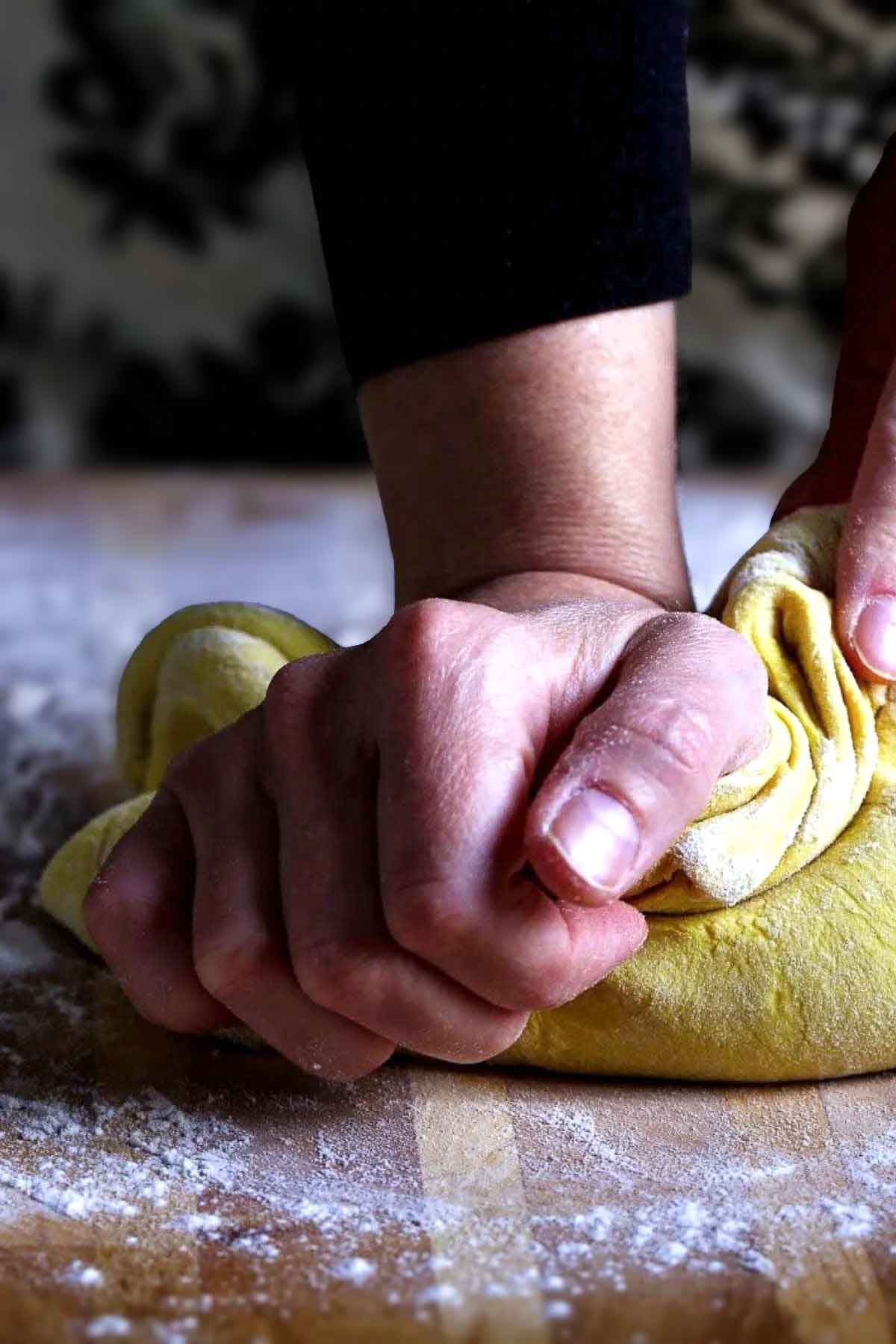
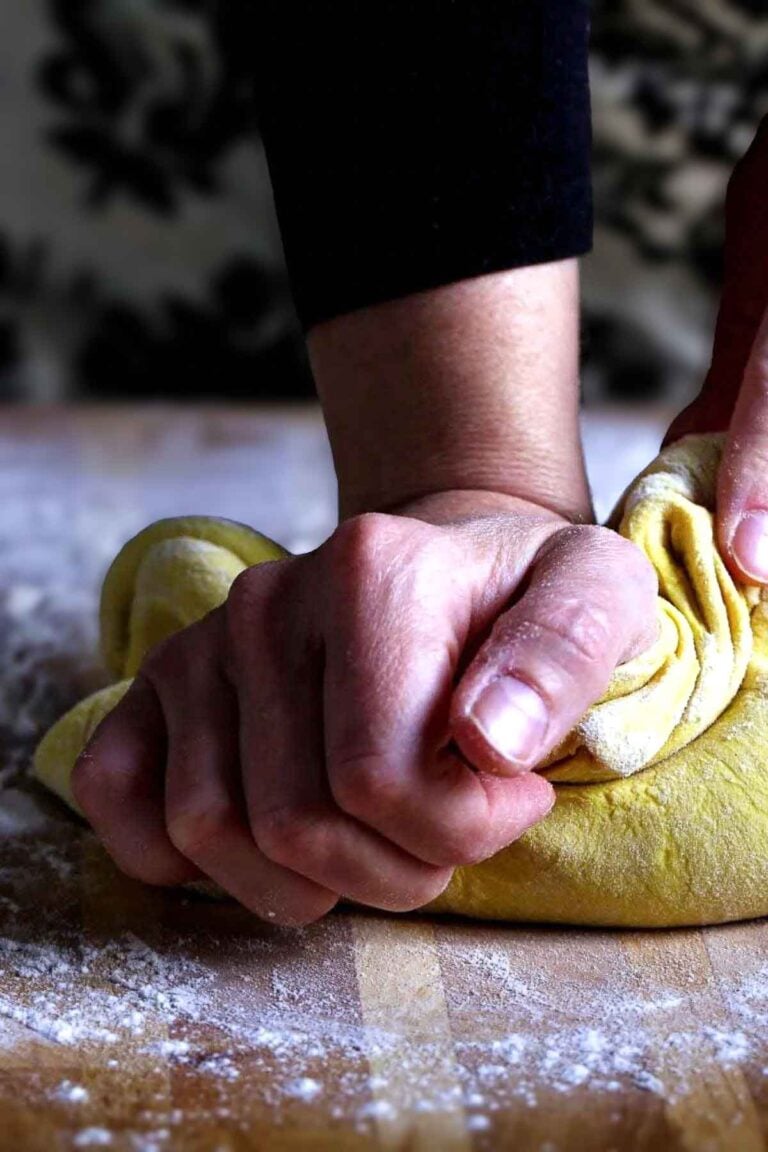
- Knead until smooth and elastic: Turn the dough out onto a lightly floured surface and knead for 8–10 minutes. At first it may feel slightly tacky; as you knead, it should become smooth, supple, and elastic. If it sticks to your hands or the counter, dust in flour one tablespoon at a time—just enough to keep it workable without drying it out. You’re done kneading when the surface feels satiny, and the dough springs back slowly when pressed.
- Rest before rolling: Wrap the dough tightly in plastic wrap and let it rest at room temperature for at least 30 minutes. This rest allows the gluten to relax, which makes rolling easier and helps prevent snap-back. If you’re prepping ahead, the dough can rest overnight in the refrigerator. Before rolling, let it sit at room temperature for about 30 minutes, so it softens and becomes pliable again.
- Roll thin for ravioli: When you’re ready to use the dough, divide it into manageable portions and keep the rest covered. Roll each piece until thin but sturdy—about 1/16 inch thick, or setting #4 on most pasta machines. The dough should feel flexible and strong, not fragile.
From here, the dough is ready to be filled, sealed, and cooked using your preferred ravioli method. For a detailed guide, check out our step-by-step ravioli process, and vegan ravioli filling ideas.
Rolling the Dough for Ravioli
Rolling is where ravioli dough succeeds or fails. The goal isn’t ultra-thin sheets—it’s dough that’s thin enough to seal cleanly and sturdy enough to lift, fill, and move without tearing. Here are some things to look out for:
- Target thickness: Roll the dough to about 1/16 inch thick, or setting #4 on most pasta machines. At this thickness, the dough stretches easily into a mold or around filling without splitting.
- Too thin: If the dough turns translucent, stretches unevenly, or tears as you lift it, it’s been rolled too far. This often leads to leaks during cooking.
- Too thick: Dough that’s rolled too thick won’t seal well and can cook up doughy at the seams, even if the filling is well-balanced.
- Watch for snap-back: If the dough resists rolling or shrinks back after each pass, it needs more rest. Pause, cover it, and let it relax for 5–10 minutes before continuing.
- Work with small portions and keep the rest covered. Dough that stays evenly hydrated and relaxed will roll thin and seal nicely.
Storage, Make-Ahead, and Freezing Notes
This dough works well for both same-day use and make-ahead prep. After allowing the dough to rest, it can be rolled out to make ravioli. If you want to prep earlier, here’s how to store the dough correctly:
- Refrigeration: Wrapped tightly, unrolled dough can be stored in the refrigerator for up to 24 hours. Before rolling, let it sit at room temperature for about 30 minutes so it softens and becomes pliable again.
- Freezing: This dough freezes best once it’s been shaped into ravioli. Arrange filled ravioli in a single layer and freeze until firm, then transfer to a container or bag. Cook directly from frozen—no thawing needed.
Troubleshooting Vegan Ravioli Dough
Most issues with vegan ravioli dough come down to hydration, rest, or thickness. Because this dough is designed to roll thin and seal cleanly, small adjustments make a big difference.
- Dough tearing while rolling: This usually means the dough is slightly dry, unevenly rolled, or pushed too thin too quickly. Lightly mist the surface with water, fold the sheet once to redistribute moisture, let it rest for a few minutes, then reroll.
- Dough snapping back: The gluten hasn’t relaxed enough. Cover the dough and let it rest for 5–10 minutes, then continue rolling.
- Sticky dough: Use flour sparingly. Excess flour dries the surface and can interfere with clean sealing later. Dust lightly and brush off any excess before filling.
- Seams opening during cooking: This is most often caused by uneven thickness or overfilling. Roll evenly, keep the filling modest, and press out air as you seal. For shaping and sealing technique, see the step-by-step ravioli guide.
If something feels off mid-batch, pause and adjust. Ravioli dough is forgiving once hydration, rest, and thickness are back in balance.
FAQs
Yes. Ravioli dough doesn’t require eggs to work well—what it needs is balanced hydration and enough structure to roll thin and seal cleanly. In this vegan ravioli dough, silken tofu provides protein and moisture that help the dough stay cohesive and flexible, making it well suited for filled pasta.
It can be. Dough for long-cut pasta like fettuccine or spaghetti often prioritizes elasticity and chew, while ravioli dough needs to roll thinner, stretch gently, and seal without cracking. This vegan ravioli dough is formulated specifically for ravioli, where tenderness and sealability matter more than bounce.
Sealing comes down to three things: even hydration, proper thickness, and rest. This dough hydrates evenly thanks to silken tofu, rolls thin without tearing, and benefits from a short rest that relaxes the gluten—making it easier to press and seal around a filling without leaks.
This vegan ravioli dough is designed to roll thin, seal cleanly, and stay tender through cooking—without eggs or complicated techniques. Once you’ve made it once, it becomes a reliable foundation for any ravioli filling you love.

Recipe Filling Ideas To Use with This Dough
- Vegan Sausage Ravioli
- Carrot Lox-Stuffed Ravioli
- Vegan Ravioli With Cashew Cheese Filling
- Homemade Pumpkin Ravioli
If you made this vegan ravioli dough recipe, we’d love it if you left a comment and star rating below. It helps others find our work, and your feedback makes our day!
Get This Recipe In Your Inbox
Share your email, and we’ll deliver it straight to your inbox.
Plus, enjoy new content every week as a bonus!
Vegan Ravioli Dough
This vegan ravioli dough is eggless, soft, flexible, and easy to work with. A blend of 00 flour and semolina gives the dough tenderness with just enough structure, while silken tofu provides protein and even hydration so it rolls thin, seals cleanly, and cooks up tender. Designed specifically for filled pasta, this dough is forgiving, reliable, and ideal for homemade ravioli.
- Total Time: 50 minutes
- Yield: 48 ravioli
Ingredients
- 8 ounces silken tofu
- 1 1/2 tablespoons olive oil
- 1/4 teaspoon turmeric (optional, for color)
- 1/2 teaspoon sea salt
- 1 1/2 cups 00 flour
- 1 cup semolina flour (plus more for dusting)
Instructions
Blend the wet ingredients
In a food processor, combine the silken tofu, olive oil, turmeric (if using), and sea salt. Blend until completely smooth.
Incorporate the dry ingredients
With the processor running on low or using pulse mode, add the 00 flour and semolina gradually, alternating between the two. The dough should begin to clump and form a shaggy ball.
Knead the dough
Turn the dough out onto a lightly floured surface and knead for 8–10 minutes, until smooth, elastic, and no longer sticky. Add flour sparingly, one tablespoon at a time, only if needed.
Rest the dough
Wrap the dough tightly in plastic wrap and let it rest at room temperature for at least 30 minutes. This relaxes the gluten and makes the dough easier to roll.
If refrigerated overnight, bring the dough to room temperature for about 30 minutes before rolling.
Notes
- Storage: Wrapped tightly, fresh dough can be refrigerated for up to 24 hours. Always let it return to room temperature before rolling.
- Rolling tips: If the dough snaps back while rolling, pause and let it rest for 5 minutes before continuing.
- Thickness guide: For ravioli, roll the dough to about 1/16-inch thick or setting #4 on a pasta machine.
- For filling and cooking: Use this dough with your favorite ravioli filling, such as vegan ricotta or plant-based sausage. For step-by-step rolling, filling, sealing, and cooking instructions, see my How to Make Ravioli guide.
- Prep Time: 20 minutes
- Rest time: 30 minutes
- Category: Dinner
- Method: Kneaded
- Cuisine: American, Italian
- Diet: Vegan