
This vegan red curry sauce is one of those back-pocket recipes that quietly makes everything better—rich, aromatic, and endlessly useful. Creamy with coconut milk and layered with red curry paste and ginger, it’s designed to lift vegan proteins and vegetables without feeling heavy or overpowering.
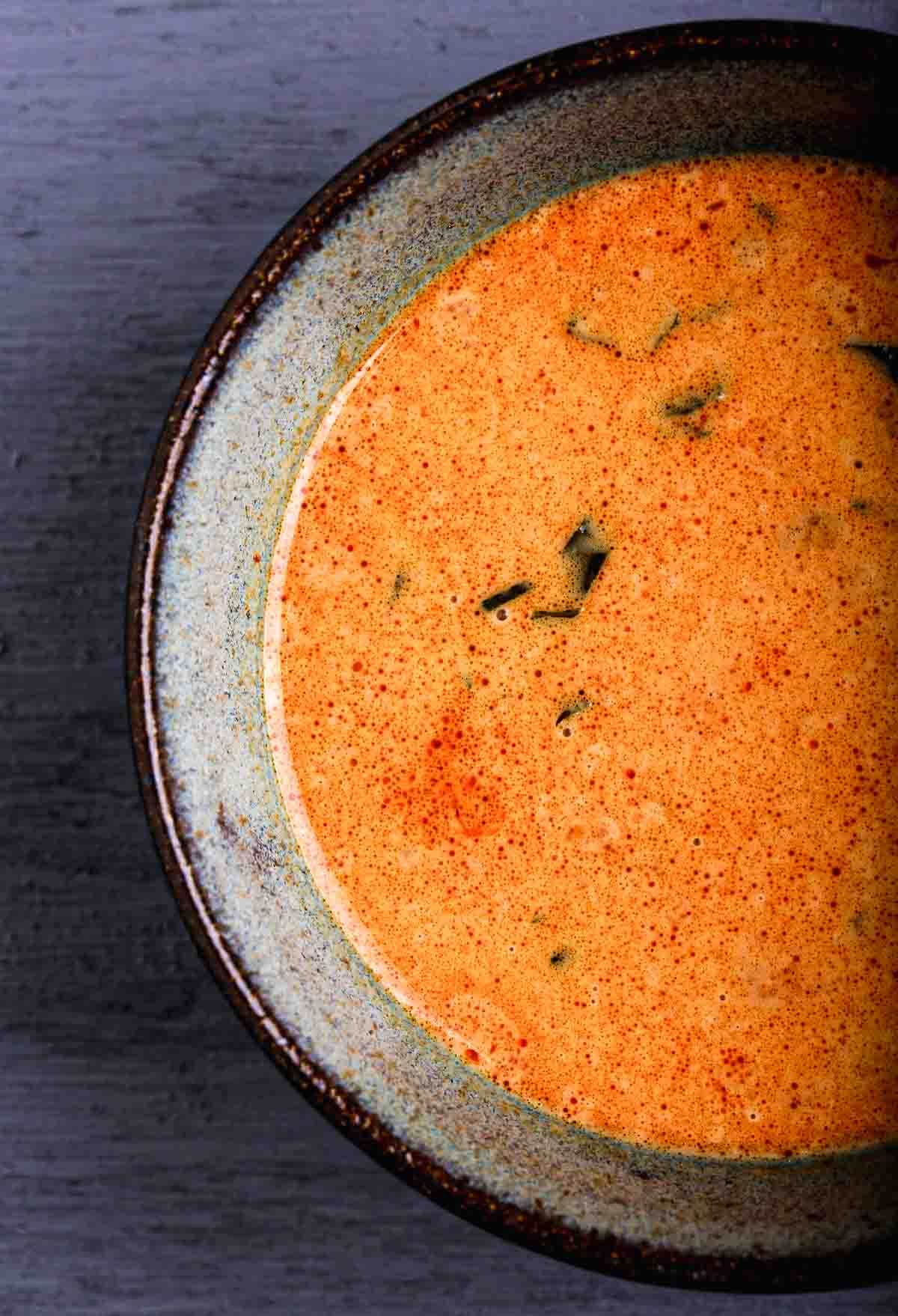
A good vegan red curry sauce should be lush, fragrant, and deeply savory—creamy from coconut milk, gently spicy from red curry paste, and layered with aromatics that build real depth. If you’ve ever made a curry that tasted flat or one-note, the difference usually comes down to how the sauce is built. This Thai-inspired version comes together quickly on the stovetop and delivers bold flavor without relying on bottled shortcuts or overly sweet ingredients.
Made with ginger, lemongrass, basil, and full-fat coconut milk, this Thai-style red curry sauce is designed to be a flexible, from-scratch base you can use in countless ways. Pair it with tofu, soy curls, mushrooms, or vegetables—or spoon it over rice, noodles, or bowls. It’s balanced, adaptable, and the kind of foundational sauce you can build meals around all week.
What This Sauce Tastes Like
This vegan red curry sauce is creamy and aromatic, with a warm, gently spicy backbone from the red curry paste and fresh ginger. The coconut milk gives it richness without heaviness, while lemongrass adds a subtle citrusy lift that keeps the sauce bright and balanced.
It’s savory and well-rounded rather than sweet, with enough depth to stand on its own but still neutral enough to pair with a wide range of ingredients. The finish is smooth, fragrant, and clingy—designed to coat tofu, vegetables, or noodles without overpowering them.
Key Ingredients (And Why They Matter)
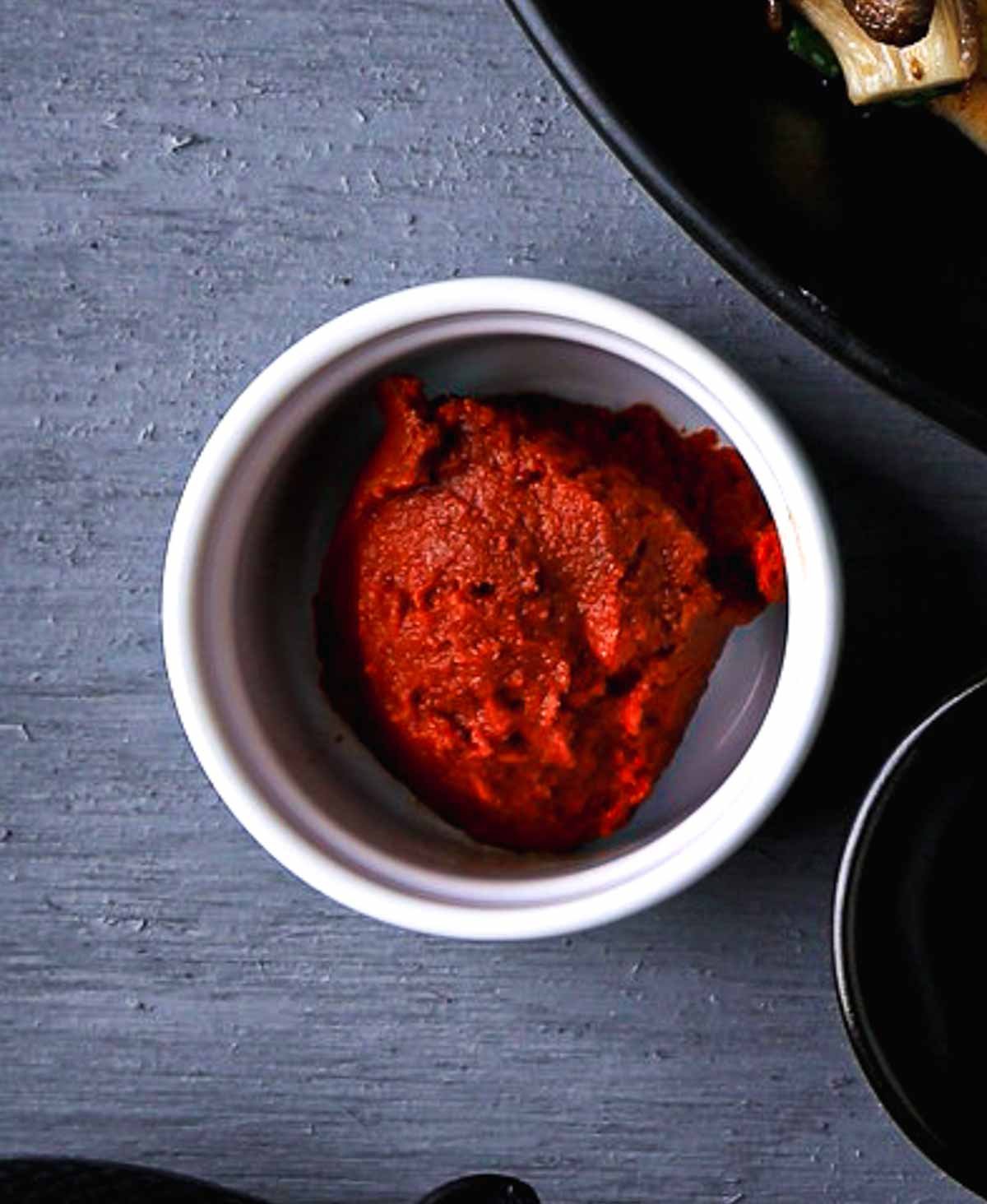
- Red curry paste: This is the backbone of the sauce. Red curry paste brings chile heat, aromatics, and depth in one move, but brands vary widely in intensity and saltiness. Start on the lower end if you’re unsure—you can always add more. Some brands contain fish, so always check the label to ensure it’s vegan.
- Fresh ginger: Ginger adds warmth and brightness without competing with the curry paste. Cooking it gently in oil softens its bite and helps it meld into the sauce.
- Lemongrass: Lemongrass gives the sauce its subtle citrusy lift. Bruising the stalk before simmering helps release its aroma, infusing the sauce without making it sharp or grassy.
- Full-fat coconut milk: This is what gives the sauce its body and richness. Full-fat coconut milk creates a smooth, cohesive texture that clings well to almost everything.
- Soy sauce and brown sugar: These two work together to balance the sauce. Soy sauce adds umami and saltiness, while brown sugar rounds out the heat and acidity without making the sauce sweet.
- Fresh basil: Added at the end, basil brings a fresh, aromatic finish that lightens the richness of the coconut milk and ties the flavors together.
How To Make Vegan Red Curry Sauce
This sauce starts by gently warming fresh ginger in toasted sesame oil, which softens its bite and builds a fragrant base. The red curry paste is bloomed next to deepen its flavor, followed by coconut milk and bruised lemongrass to infuse the sauce with richness and aroma. A brief simmer brings everything together, and once the flavors have melded, the lemongrass is removed, and the sauce is ready to use or build on.
How To Serve
This sauce is designed to be a flexible base you can build meals around, not a one-off recipe you make once and forget. Think of it as a shortcut to depth—something you can warm, spoon, and adapt depending on what’s in your fridge. Here are some ideas to get started:
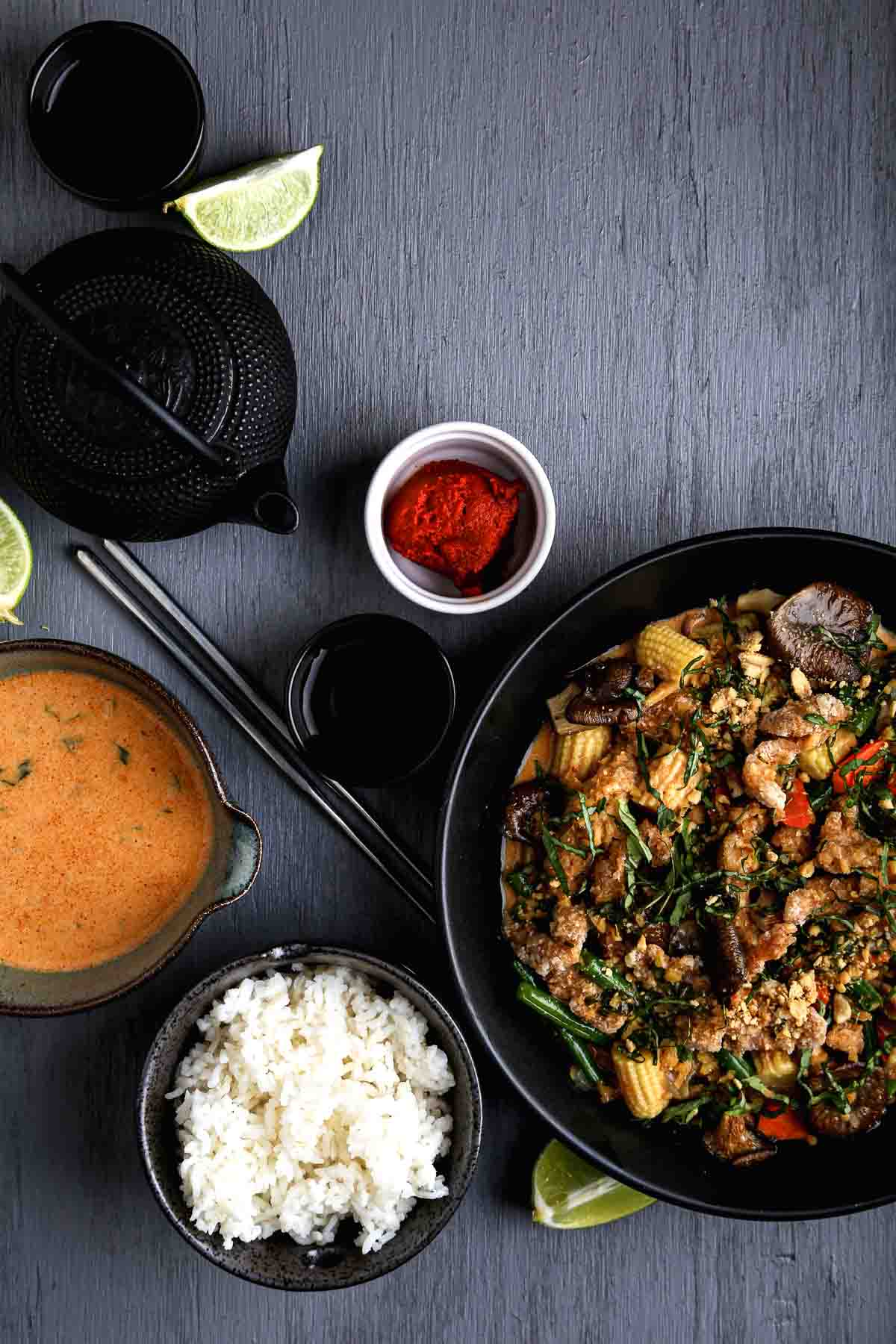
- With tofu, soy curls, or tempeh. Pan-sear your vegan protein first for the best texture. For soy curls, rehydrate, squeeze out excess moisture, then sear in a hot pan until golden and slightly crisp before adding the sauce. This sauce clings well to seared tofu and tempeh, making it ideal for quick weeknight meals.
- With vegetables. Use it to finish stir-fried or roasted vegetables—broccoli, green beans, carrots, mushrooms, or whatever you have on hand. Add enough sauce to coat and bring everything together. Be sure to check out our guides on how to cook oyster mushrooms and king oyster mushrooms for tips and ideas!
- Over rice or noodles. Serve it warm over jasmine rice, rice noodles, or udon for a simple, satisfying bowl. Add fresh herbs, lime wedges, or crushed peanuts if you like a little contrast.
- As a curry-style base. Build a complete dish by adding cooked plant-based protein and vegetables directly to the sauce and gently warming everything together. It’s rich, lush, and clings well to everything.
FAQs
It can be, but it depends on the ingredients. Traditional Thai red curry paste often contains shrimp paste or fish sauce, which are not vegan. This vegan red curry sauce uses a curry paste that’s labeled vegan and relies on coconut milk, aromatics, and soy sauce for depth instead of animal-based ingredients.
This sauce is gently spicy and balanced, not hot. Red curry paste provides warmth and depth rather than aggressive heat, and the coconut milk keeps the sauce balanced and mellow. If you’re sensitive to spice, start with 1 teaspoon of curry paste; if you like more heat, increase it gradually.
This flexible, coconut-milk–based curry sauce can be spooned over rice or noodles, tossed with browned tofu, soy curls, or tempeh, or used to bring vegetables together into a simple curry-style meal.
Recipes That Pair Well with This Sauce
Have you tried this vegan red curry sauce recipe? We’d love if you left a comment and star ratings below. It supports our work and helps others find it!
Get This Recipe In Your Inbox
Share your email, and we’ll deliver it straight to your inbox.
Plus, enjoy new content every week as a bonus!
Vegan Red Curry Sauce
This vegan red curry sauce is rich, aromatic, and built for everyday cooking—creamy with coconut milk and layered with red curry paste, ginger, and lemongrass. It comes together quickly on the stovetop and delivers depth without relying on bottled sauces or overly sweet shortcuts. Spoon it over rice or noodles, toss it with tofu or vegetables, or use it as a flexible base to build easy, flavor-forward meals throughout the week.
- Total Time: 20 minutes
- Yield: 2 cups
Ingredients
- 1 tablespoon toasted sesame oil
- 1 tablespoon finely minced fresh ginger
- 1–2 teaspoons vegan red curry paste
- 1 stalk lemongrass, tough outer layers removed, bruised and cut into 2–3 pieces
- 1 (13.66-ounce) can full-fat coconut milk
- 2 tablespoons soy sauce
- 1 tablespoon brown sugar
- 5 large fresh basil leaves, thinly sliced (chiffonade)
Instructions
Warm the oil and soften the ginger.
- Heat the toasted sesame oil in a medium saucepan over medium-low heat.
- Add the ginger and cook for 1–2 minutes, stirring frequently, until softened and fragrant.
- Reduce the heat slightly if it begins to stick.
Bloom the curry paste.
- Add the red curry paste and stir until it loosens and disperses into the oil. This step wakes up the spices and builds depth in the sauce.
Infuse with lemongrass and coconut milk.
- Add the lemongrass pieces, then pour in the coconut milk.
- Stir to combine, then add the soy sauce, brown sugar, and basil.
Simmer briefly.
- Increase the heat to medium and bring the sauce to a gentle simmer. Once small bubbles appear, turn off the heat and give the sauce a final stir.
- Leave it on the warm burner for a few minutes to let the flavors meld.
Finish and use.
- Remove and discard the lemongrass pieces.
- Use the sauce warm as a base, or let it cool slightly before storing.
Notes
- Adjust the heat: Red curry paste varies a lot by brand. Start with 1 teaspoon if you’re unsure, then add more to taste once the sauce is warm and cohesive.
- Lemongrass tip: Bruise the stalk well before adding it to the pot to release its aroma, and remove before serving.
- Make-ahead: This sauce can be made in advance and reheated gently on the stovetop.
- Storage: Store cooled sauce in an airtight container in the refrigerator for up to 4 days.
- Prep Time: 5 minutes
- Cook Time: 15 minutes
- Category: Sauce
- Method: Sautéed, Simmered
- Cuisine: Thai-Inspired
- Diet: Vegan
This recipe was originally published in 2015 and updated in 2025 with serving suggestions and clarified recipe instructions.



I just tried this. Pretty good and I've got half a pint left for the week. I generally just do the Thai Heritage and coconut milk solo but I thought this would be a good way to mix it up a bit. I'll keep playing with different combos. Thanks for the inspiration.
this is super tasty with tempeh. definitely will be making again!
Will have to make this with the soy curls I have!
This sauce looks very delicious. I love curry, and I'm trying this.
Thank you, I hope you enjoy!
We thoroughly enjoyed the tiny bit of leftovers tonight and I've been commissioned to make it again this weekend! It is so flavorful and amenable to extra spice and whatever veggies we have in the fridge. We ate it over rice with tamari-braised tofu and the only veggies we had left in the house (carrots, red cabbage, celery, chopped cilantro on top, & sweet potato just for me). Tastier than restaurant food.Just looked at your beautiful photo and realize I forgot to add the crushed peanuts (next time)! Super easy to make and I love that I can add extra veggies my husband won't eat to my bowl. Hope you will consider publishing a cookbook.
I love to hear that! Thanks for your kind words, so happy you enjoyed and will make it again! 🙂
Is there any substitute for the fresh lemongrass? We have some ancient dry (probably no more flavor) in a spice container, but that's about it. Would like to make this tonight as we have all of the other ingredients!
You could try some lemon zest here (will not be quite the same flavor, but the closest thing I can think of) or just leave it out all together … you'll still have a nice fragrant sauce … I hope you enjoy!
I made it with just a little dried lemongrass (hedged my bets!) and we finished our individual bowls with a spritz of lemon juice. I used the Thai kitchen curry paste. It was delicious and we will definitely make again and again! It was the first time I have made anything Thai-style that actually tasted like Thai food. Thank you! I might try it with half a can of coconut milk and the same volume plain TJ's soymilk to see if that would taste just as good.
Thanks so much for letting me know how this worked out for you! Your subs sounds great, glad you were able to use what you had with good results!
This looks fantastic, thanks! Love the use of lemon grass and I need to get more creative with it.
Wow! This looks and sounds amazing! Thanks for the recipe! I cant wait to try it!