
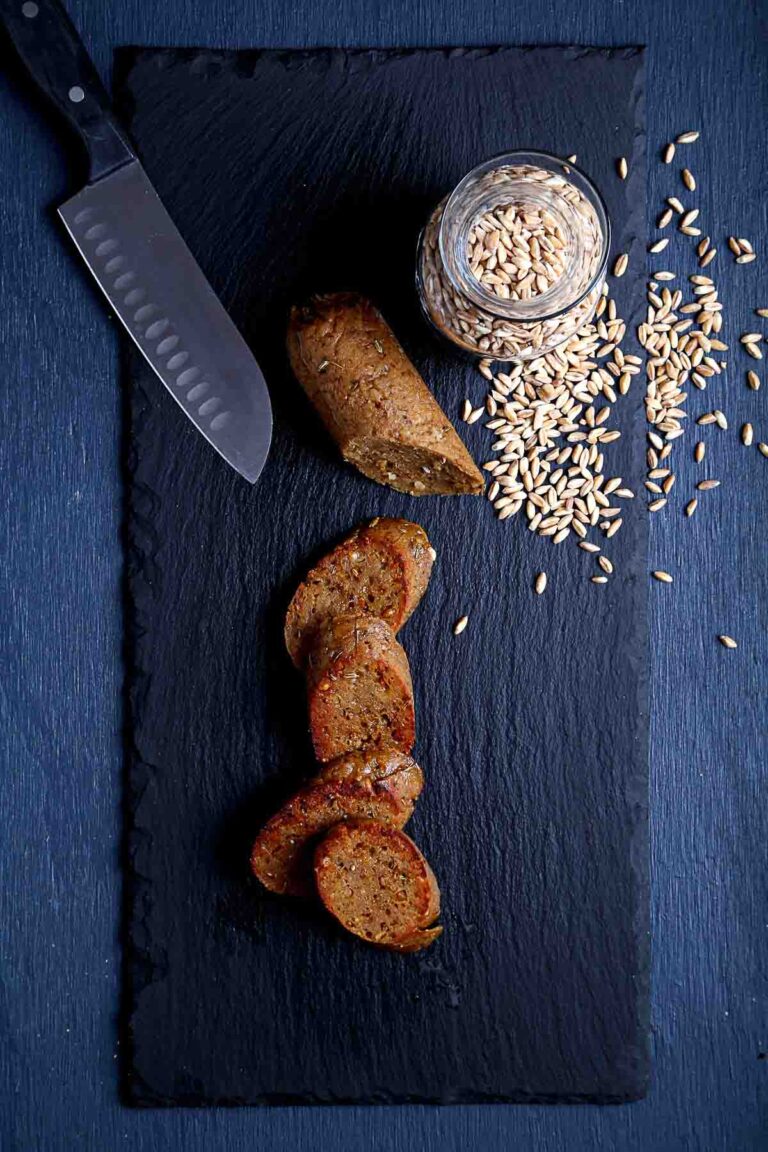
This vegan Italian sausage recipe brings the texture and flavor of the classic version into plant-based territory. Farro and seitan combine to create a rustic, hearty feel that browns beautifully in a hot pan and adds savory depth to everything from brunch plates to pasta, sandwiches, and more.
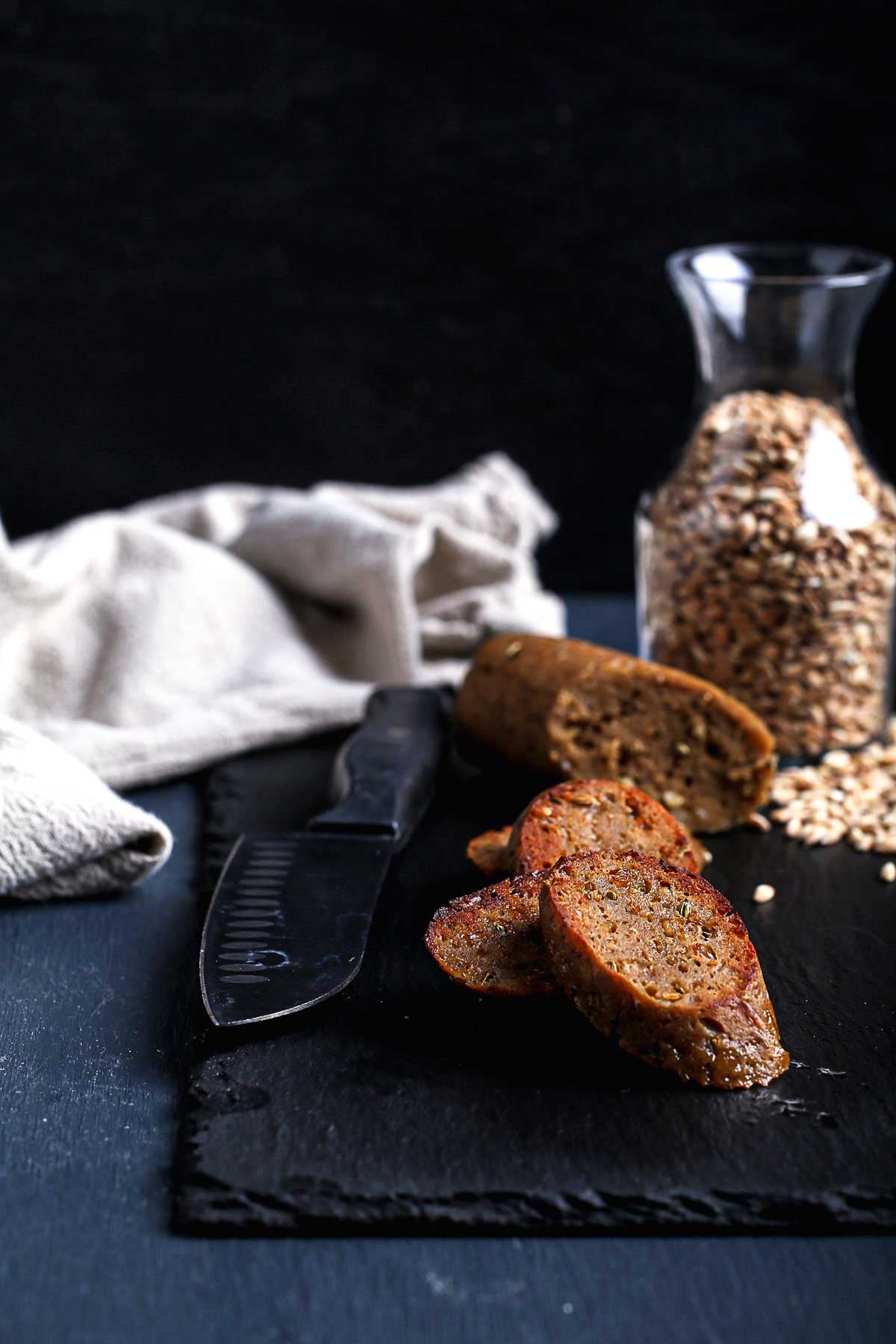
Buying vegan sausages is fine. Making your own? Better. These start with vital wheat gluten, dried shiitakes, and ground farro, which gives the sausages a hearty, slightly coarse texture once they’re steamed. Fennel seeds, soy sauce, liquid smoke, and vegan Worcestershire bring everything into Italian sausage territory, creating homemade vegan Italian sausage links you can slice and brown in a pan for brunch, pasta dishes, pizza, and more.
The farro is what makes this version work. Crushing it before cooking creates an interesting texture that just works with the vital wheat gluten’s firmer structure. After steaming, the sausages firm up enough to slice cleanly, and once they hit a hot pan, the edges brown and crisp while the centers stay tender. Make a batch, refrigerate or freeze them, and you’ve got a homemade vegan sausage ready to slice and alongside a tofu scramble, tuck into a sandwich, or serve with a grain bowl.
Why This Recipe Works
This vegan Italian sausage recipe uses a few small technique choices that make a big difference in texture and flavor. Each step builds structure so the sausages slice cleanly, brown well, and hold their shape in a pan.
- Crushed farro in the base: Gives the sausage a slightly coarse, rustic texture instead of a uniform seitan interior.
- Ground dried shiitakes: Adds a deep umami depth without needing a long ingredient list. As the sausages steam, the mushrooms release a deep savory aroma.
- A fennel-forward seasoning blend: This pushes the flavor firmly into Italian sausage territory. The fennel and garlic come through immediately once the sausages start browning.
- A soft, lightly mixed dough keeps the texture tender instead of dense. This no-knead mixture stays softer because the gluten isn’t tightened through heavy mixing. If the mixture feels a little loose before shaping, you’re in the right zone.
- Steaming before browning: Sets the structure so the sausages slice cleanly later. After cooling, they hold together easily when cut into rounds and seared.
Key Ingredients
A simple but balanced list of pantry ingredients and seasonings builds the structure and flavor in this vegan Italian sausage. Here’s what they are and what they do:
- Vital Wheat Gluten: This is the structural backbone of the sausage. When hydrated, it forms the protein network that gives seitan its signature chew and allows the mixture to hold its shape during steaming. The key is restraint—mix just until the dough comes together. Overworking it tightens that network and can lead to a dense, rubbery texture.
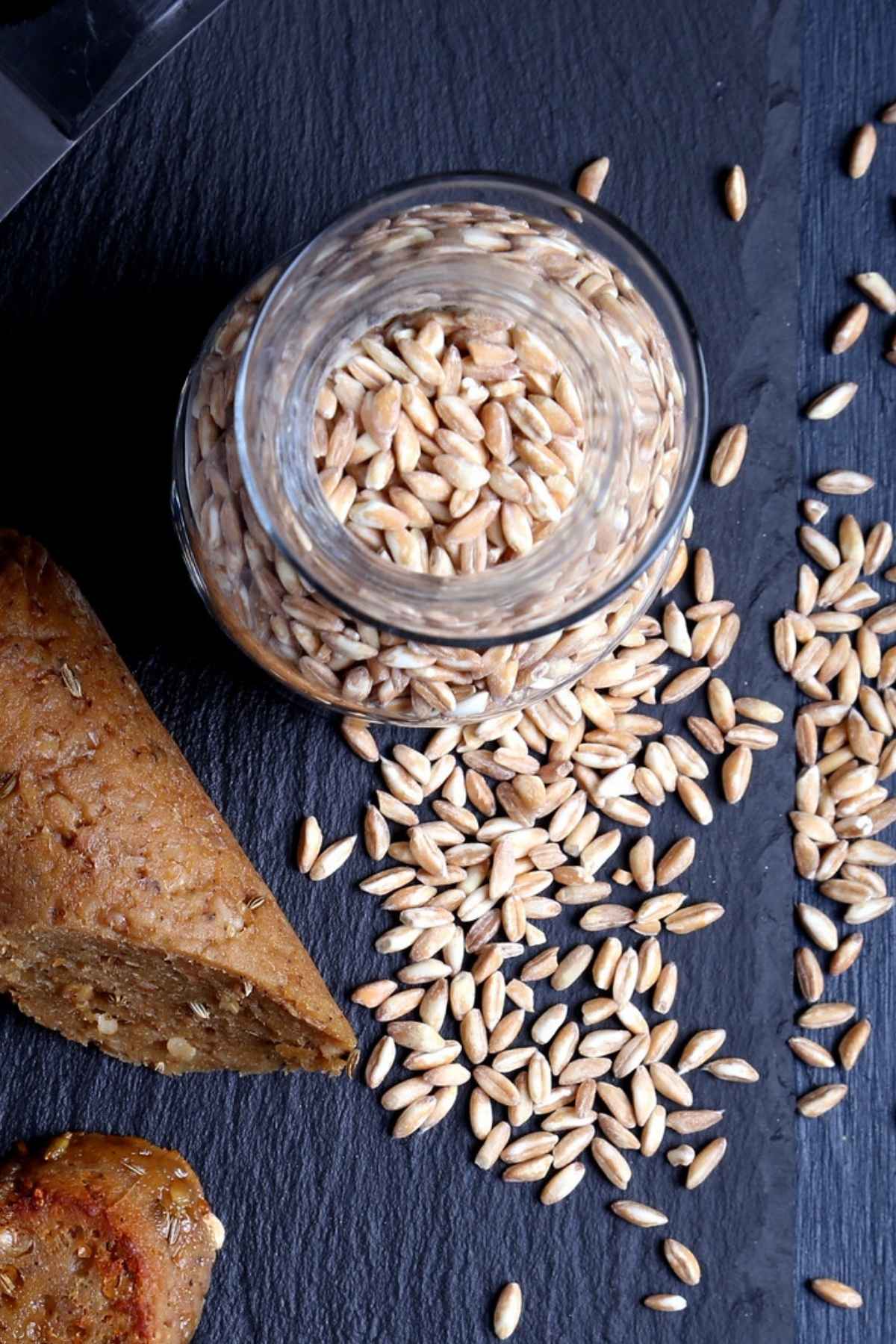
- Farro: Farro adds subtle chew and variation to the interior of the sausage. Crushing the grains before cooking helps them integrate into the dough to create its signature texture.
- Dried Shiitake Mushrooms: Ground dried shiitakes add concentrated savory depth throughout the base. Once ground, their job is to season rather than add texture. Another dried mushroom, like porcini, can be subbed here. Don’t skip this ingredient; it’s what builds a lot of the background umami.
- Fennel Seeds: Fennel is what signals “Italian sausage.” When heated, the seeds release a warm, slightly sweet aroma that defines the overall flavor profile. Lightly crushing them before mixing helps spread that flavor through the dough.
- Liquid Smoke and Vegan Worcestershire: These two ingredients provide the subtle cured and fermented notes that round out the seasoning. Liquid smoke adds a gentle smokiness, while vegan Worcestershire contributes tangy depth. Used together in small amounts, they create a fuller savory profile once the sausages are browned.
How to Make Vegan Italian Sausage
This vegan Italian sausage comes together in four main stages: cooking the farro base, mixing the seitan dough, shaping the sausages, and steaming until firm. Once cooled, the sausages slice cleanly and brown beautifully in a hot skillet. For full recipe instructions, scroll to the end of this post!
- Step 1: Cook the farro base – Combine the crushed farro, shiitake powder, and water in a saucepan. Bring to a boil and cook uncovered for about 15 minutes, stirring occasionally, until the mixture thickens slightly and looks like a loose porridge.
- Step 2: Season the mixture – Stir in the soy sauce, coconut oil, Worcestershire, liquid smoke, sesame oil, fennel seeds, onion powder, garlic powder, salt, and black pepper. Let it cool until warm but not hot.
- Step 3: Form the dough – Add the vital wheat gluten and stir until a soft dough forms. It should feel soft but shapeable, not stiff. Common miss: Overmixing creates a dense texture. Stir just until combined.
- Step 4: Shape the sausages – Divide the dough into 4 portions and roll each into a 6-inch sausage. Wrap each one in lightly greased foil, twisting the ends to seal.
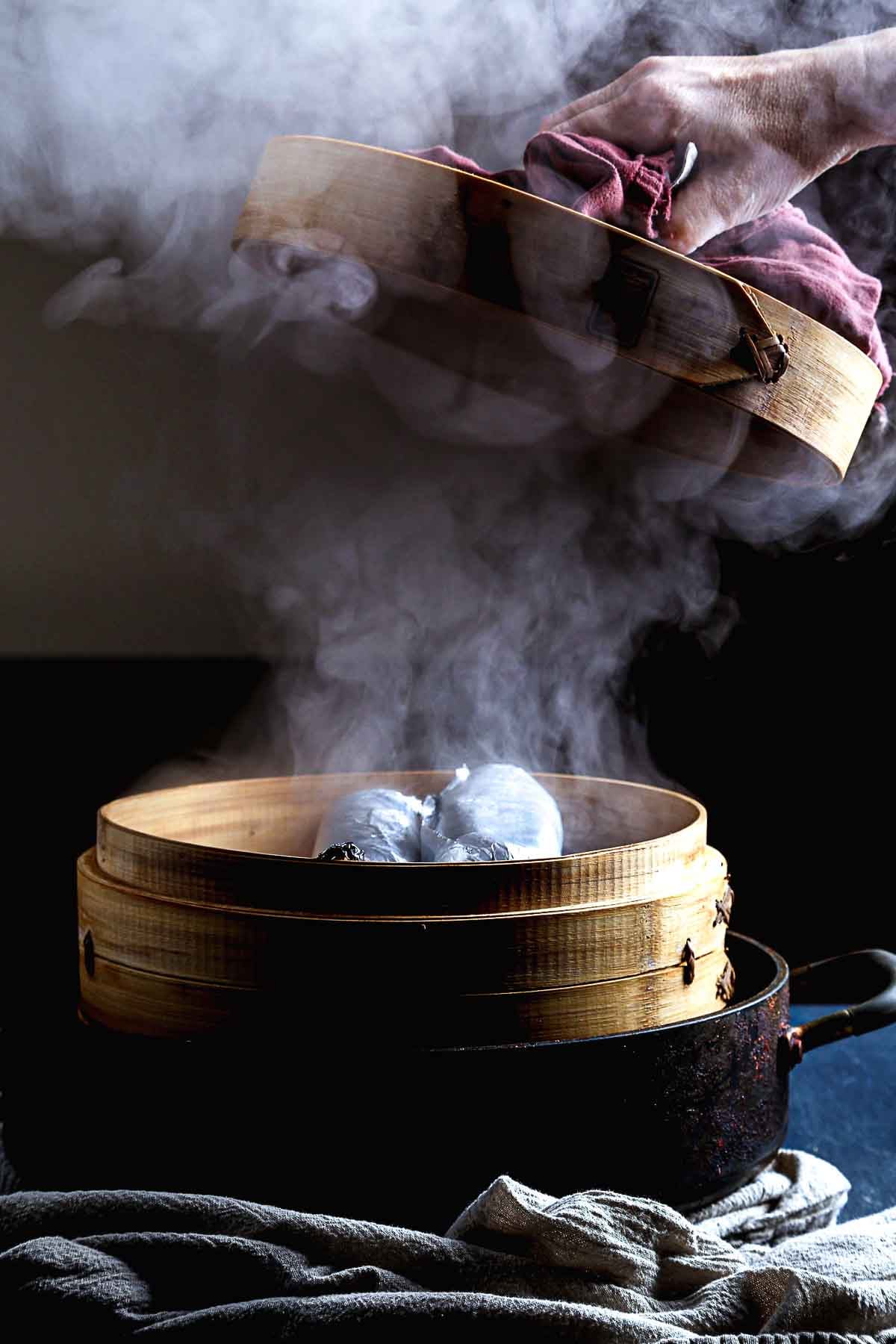
- Step 5: Steam – Place the sausages in a steamer basket over simmering water. Cover and steam for 1 hour, checking occasionally to add more water if needed.
- Step 6: Cool and brown – Let the sausages cool completely before slicing. Brown slices in a hot skillet with a little oil until the edges turn deep golden and slightly crisp.
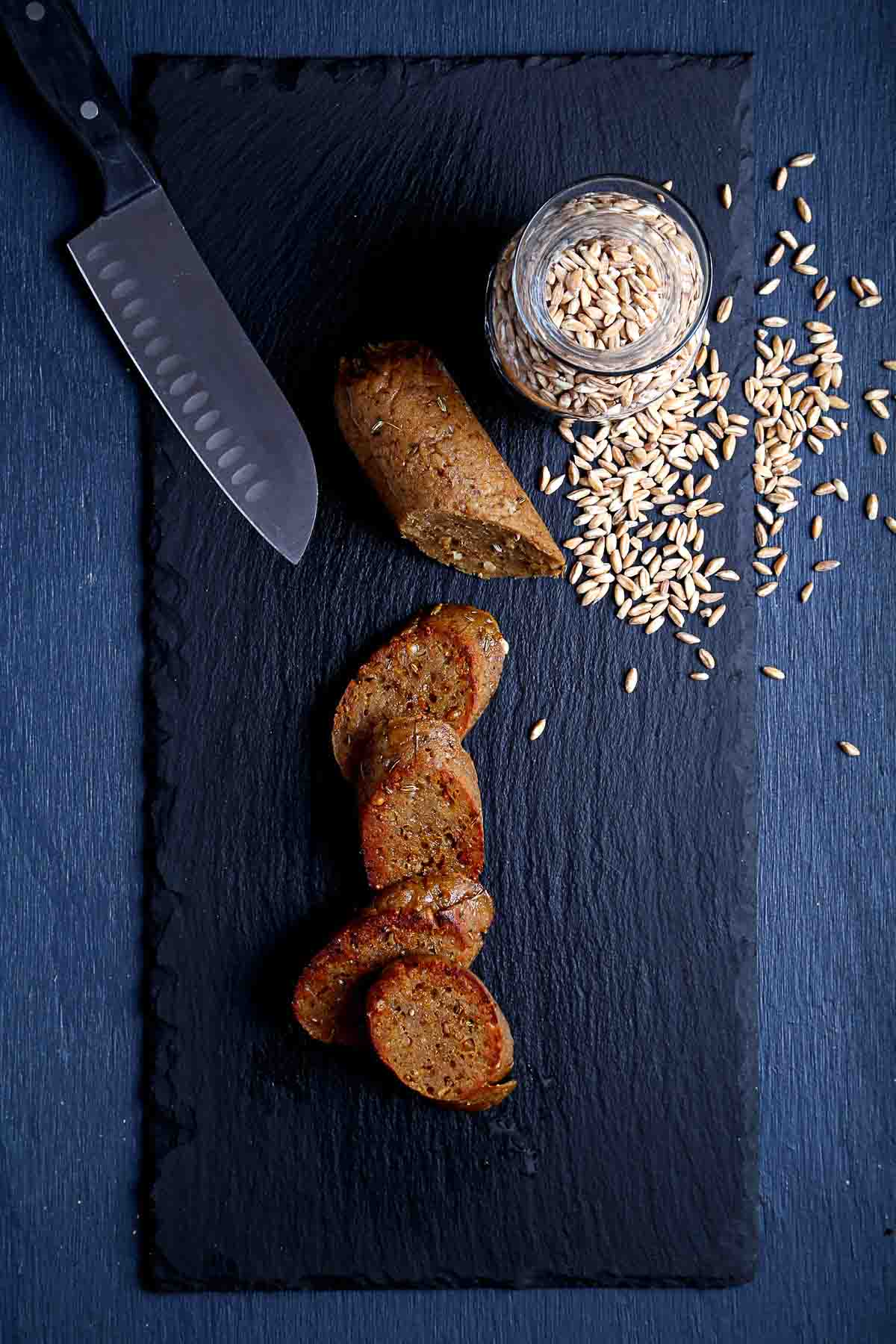
Once the sausages are steamed and cooled, they’re ready to slice and brown whenever you need them. Here are a few quick answers to common questions before you get started.
FAQs
A bamboo steamer works well and is what I use when making these sausages. Any steamer setup will work, though, as long as the sausages sit above the simmering water so they cook in steam rather than making contact with the water. A metal steamer basket placed inside a pot works just as well.
That’s normal. Seitan dough should feel soft and slightly tacky at this stage. If the dough is stiff or dry, the finished sausages tend to be dense rather than tender. If the mixture is extremely loose, add a little more vital wheat gluten (about a tablespoon at a time) until it holds together.
The sausages will still hold together without the shiitake powder, but the flavor will be noticeably flatter. Ground dried mushrooms add concentrated savory depth to the mixture. Another dried mushroom powder, such as porcini, can be used if needed.
Ways to Use this Vegan Sausage
- Make a vegan sausage pizza with this easy vegan pizza dough
- Top off this white wine pasta dish with thin slices
- Stuff homemade ravioli by mincing it
- Mix it into this toasted farro salad for a hearty grain bowl
Did you make this vegan Italian sausage recipe? Please consider leaving a star rating and a comment. I love hearing from you, and your feedback helps others find this recipe!
Get This Recipe In Your Inbox
Share your email, and we’ll deliver it straight to your inbox.
Plus, enjoy new content every week as a bonus!
Vegan Italian Sausage (Seitan Sausage with Farro)
This vegan Italian sausage delivers the savory, fennel-forward flavor and hearty bite you’d expect from traditional sausage. The secret is crushed farro mixed into the seitan base, which creates a slightly coarse texture that slices cleanly and browns beautifully. Keep a batch in the fridge or freezer to add to pasta dishes, layer onto pizza, or for hearty sandwiches and protein-rich grain bowls.
- Total Time: 1 hour 30 minutes
- Yield: 4 sausages
Ingredients
- ½ cup farro, crushed into coarse pieces in a coffee grinder or food processor
- ¾ cup shiitake powder (grind dried shiitake mushrooms in a spice or coffee grinder until fine)
- 3 cups water
- 2 tablespoons soy sauce
- 2 tablespoons refined coconut oil
- 1 tablespoon vegan Worcestershire sauce
- 1 tablespoon liquid smoke
- 1 tablespoon sesame oil
- 1 tablespoon fennel seeds
- 1 teaspoon onion powder
- 1 teaspoon garlic powder
- 1 teaspoon salt
- ¼ teaspoon black pepper
- 1¼ cups vital wheat gluten, plus up to 1/4 cup more if needed
- cooking spray
Instructions
Cook the farro base
- Place the crushed farro and shiitake powder in a medium saucepan.
- Whisk in the water and bring to a boil over medium-high heat.
- Cook uncovered for about 15 minutes, stirring occasionally, until the mixture thickens slightly. Remove from the heat.
Season the mixture
- Stir in the soy sauce, coconut oil, Worcestershire, liquid smoke, sesame oil, fennel seeds, onion powder, garlic powder, salt, and black pepper.
- Let the mixture cool for several minutes so it’s warm but not hot.
Form the dough
- Add the vital wheat gluten and stir until a soft dough forms. The mixture should feel soft but shapeable, not stiff. If it’s too loose, add more vital wheat gluten a few tablespoons at a time until the dough can hold its shape. Avoid kneading—just mix until combined.
Shape the sausages
- Divide the dough into 4 portions and roll each piece into a sausage about 6 inches long.
- Spray four 8-inch squares of foil lightly with cooking spray. Place a sausage on each piece and roll the foil around it, twisting the ends to seal.
Steam
- Set a steamer basket or bamboo steamer over a pot of simmering water. The water should sit below the basket, not touching it.
- Place the wrapped sausages in the basket, cover, and bring the water to a boil, then lower to a simmer. Steam for 1 hour, checking occasionally to replenish the water if needed.
Cool
- Let the sausages cool completely in the foil. This allows the gluten structure to firm up so the sausages slice cleanly.
- Refrigerate or freeze until ready to use.
- Slice and brown in a hot skillet with a little oil and serve.
Notes
- Let the sausages cool before slicing: After steaming, the gluten structure is still soft. Cooling the sausages completely in the foil allows them to firm up so they slice cleanly instead of tearing.
- The dough should feel soft, not stiff: When the vital wheat gluten is mixed in, the dough should be just firm enough to shape. If it feels tight or rubbery at this stage, the finished sausages will be dense.
- Crush the farro before cooking: Grinding the farro into coarse pieces helps it integrate into the dough. Whole grains won’t distribute evenly and can create hard spots in the finished sausage.
- Brown for the best flavor: These sausages are fully cooked after steaming, but they taste best sliced and browned in a skillet. The edges crisp and caramelize, which deepens the flavor and improves the texture.
- Storage: Once cooled, keep the sausages in an airtight container in the refrigerator for up to 5 days.
- Freezing works well: Once cooled, wrap the sausages tightly and freeze for up to a few months. Thaw in the refrigerator overnight, then slice and brown as usual.
- Prep Time: 20 minutes
- Cook Time: 70 minutes
- Category: Dinner, Lunch
- Method: Boiled, Steamed
- Cuisine: Italian-inspired
- Diet: Dairy-Free, Vegan, Vegetarian
This recipe was originally published in 2016 and updated in 2026 with clarified instructions and tips.


Omg!! I made these last night and I added some organic maple syrup, caraway seeds, red hot pepper flakes and about 4 tsp of vegan ham base. I rolled them a tad bit thicker.. and these tasted just like a breakfast sausage. The farro gives it such a good sausage texture. I promise you won’t miss the real thing. Added some tofu scramble with some black salt and you have yourself a lovely breakfast burrito.
Jessica, great idea! Love your adaptations and so happy you enjoyed.
Super! I am leaning more and more towards making my own Vegan staples and this fits the bill. I am a fan of farro, too. Thank you. I think it is so amazing to create a “meat substitute” without any butchery in the serenity and safety of one’s kitchen. I almost feel as empowered as plants who make their own food.
I got all excited at this recipe when it came in my inbox but we’re gluten free. I’ve never found a good sub for wheat gluten. I’m guessing this would fail spectacularly without it. Any suggestions on what to use for the chew and sticking factor of wheat gluten for those of us who are GF?
This recipe is super-dependent upon vital wheat gluten, and I’m not that familiar with gf subs, so I’m not sure I would have very good advice, sorry!I do know that Bob’s Red Mill makes a gluten-free flour, but I’ve never tried it. Maybe that could be subbed here for a similar texture? Good luck!
Aquafaba egg as a binder, have you heard of this before?
where do you get the large dried shitake mushrooms that would give you 3/4 cup grounded up?
Maureen,
Check on amazon or google “dried shiitake mushrooms” for more options. You can also find them at most Asian supermarkets. Good luck!
@Kimberly and Erin,
I don’t have a Chinese steamer either. If I want to steam something, I place a couple of large sized water chestnut tins with both ends removed, in a large pot, and place the vessel or tin foil package on top of them. I leave the pot lid open a little, to let steam escape….
ps: I steam veggie dogs and buns by balancing them on the tins…
Here are some other ideas: http://www.instructables.com/id/Quick-Homemade-Steamer-Hack/
http://food-hacks.wonderhowto.com/how-to/steam-food-without-steamer-basket-0161815/
Katy,
Great hack! Thanks for sharing!
What a fantastic recipe! Are there any other options for cooking the sausages? I don’t have a steamer basket. Would this work in a stainless steel steamer insert?
Kimberly, I’ve only ever made this recipe in a wood steamer basket, but I think a stainless steel insert should work too.
This is the basket I use. It’s reasonably priced and used a ton in my kitchen:
https://www.amazon.com/gp/product/B0001VQIYU/ref=s9_acsd_al_bw_c_x_4_w
Good luck!
Hi Erin,
This looks so good! Darn, I was thinking of buying farro yesterday, and passed.
Can I substitute it with a wild rice blend which includes: long grain brown rice, sweet brown rice, whole grain wehani rice and whole grain black japonica rice?
Katy, thanks! I’ve never tried this with rice, so I can’t say it would work for sure, but I can tell you that this dough is really forgiving and easy, so there’s a good shot!
If you do try with good results, I’d love to know!
Wow! This looks crazy impressive. I am a big fan of farro too, but I’ve never thought about using them in this type of application.
Thanks Cadry! 🙂